
Buying Property in Spain as a Foreigner: Process, Costs and Taxes

Buying a home in another country sounds harder than it is. The Spanish process is old, well-worn and surprisingly orderly: a reservation, a private contract, a notary, a registry entry. What catches foreign buyers out is never the law. It is the order of the steps, the money that has to be somewhere at a certain moment, and the checks nobody makes unless you pay someone to make them.
This guide walks through buying property in Spain as a foreigner, from the first viewing to the keys, with the costs and taxes named as they fall. We handle these purchases in Estepona every week, so the examples come from Andalusia; the process is the same across the country, only the regional tax rate changes.
Can foreigners buy in Spain at all?
Yes, without restriction and without a residence permit. Nationality changes none of your rights as an owner. What it does change is the tax rate you pay as a non-resident owner, and whether you may live in the home all year or only visit it.
Since the investor visa closed in April 2025, a purchase no longer brings residency with it, so treat the two as separate projects that happen to run in parallel. You may also have read about a proposed tax of up to 100% on purchases by non-EU residents: a bill went to parliament in May 2025 and has never been debated or voted on, so it is not law.
Before you look: NIE, bank account and a lawyer
The NIE number
The NIE is your Spanish identity number for anything official. You apply at the Spanish consulate that covers your address at home, or at a police station in Spain, or you give a power of attorney and your lawyer does it. Start it early: nothing else can be completed without it.
A Spanish bank account
You need one for the notary cheque, the utilities and the community fees. Non-residents can open an account with a certificate of non-residency that the bank arranges, and the exchange rate you use to feed that account matters more over the years than most buyers expect.
Your own lawyer
Spain does not require a lawyer for a purchase, and that is exactly why you want one. The notary confirms identities and formalities; the notary is not there to check whether the terrace is legal or the community has a pending special levy. An independent lawyer, chosen by you and not by the seller or the agent, does that work. Expect roughly 1% of the price plus VAT, and ask for a fixed quote.
The process, step by step
- Offer and reservation. Once your offer is accepted, a reservation fee, often €6,000 to €10,000, takes the property off the market for a few weeks. It should be held by the agency or the lawyer and be refundable if the legal checks turn up a problem.
- Legal checks. Your lawyer requests the nota simple from the land registry, confirms the owner, debts, charges and mortgages, checks the licence of first occupation, the planning status, the community statutes and any pending levy, and confirms the property matches what is actually built.
- Private purchase contract. Usually signed within two to four weeks of the reservation, with a deposit of around 10%. In the common arras penitenciales form: if you pull out you lose the deposit, if the seller pulls out they repay it twice over.
- Mortgage, if you need one. Spanish banks lend to non-residents at lower loan-to-value ratios than to residents and will want your income documents translated. Start the application in parallel with the private contract, not after it.
- Notary and completion. Everyone signs the escritura, the balance is paid by banker's cheque or transfer, taxes are settled and the keys change hands the same day.
- Registration and the switch-over. Your lawyer registers the deed at the land registry and moves utilities, IBI and community fees into your name. Registration takes a few weeks and is what makes your ownership public.

What buying property in Spain costs
The predictable part of buying property in Spain is the bill: the rule of thumb in Andalusia is to add 10 to 13% to the price. The biggest single item is the tax, and it depends on whether the home is new or a resale.
| Cost | Resale | New build |
|---|---|---|
| Transfer tax (ITP) | 7% | — |
| VAT (IVA) | — | 10% |
| Stamp duty (AJD) | — | 1.2% |
| Notary, registry, lawyer | about 2–3% | about 2–3% |

Two details that surprise people. First, the reference value: if the tax office's value for the property is higher than what you paid, the tax is calculated on that higher figure, so your lawyer should check it before you sign, not after. Second, if the seller is a non-resident, you as the buyer must withhold 3% of the price and pay it to the tax office on form 211 within a month. It is not an extra cost for you, it is part of the price that goes to the state rather than to the seller, but it has to be done correctly or the property answers for it.
Buying off-plan: how your money is protected
Off-plan sounds risky to people who remember Spain in 2008. The law changed after that. When a developer takes payments before the home is finished, those payments must go into a special account, separate from the company's own money, and must be secured by a bank guarantee or an insurance policy. If the home is not built or not finished as agreed, you get your money back with interest.
That is the legal backbone. In practice we also check the developer's track record, whether the building licence is in place, what the specification actually promises, and what happens if completion slips. Ask for the guarantee document with every stage payment, and keep them together. A serious developer hands them over without being chased.
What a new build gives you that a resale does not
- Ten-year structural warranty and shorter warranties for finishes and installations.
- Current standards for insulation, glazing and air conditioning, which show up on the electricity bill.
- Choice: floor, aspect and often kitchens and bathrooms, while the building goes up.
- Time: the construction period covers the months your visa paperwork needs anyway.
Paying for it: mortgages and money
A Spanish mortgage as a non-resident
Spanish banks lend to non-residents, but on tighter terms than to residents: a lower share of the price, a shorter term and more documents, usually translated, sometimes apostilled. They look at your income, your existing debts and the valuation they commission themselves, which is the figure that counts, not the asking price. Start the conversation before you sign the private contract, because a deposit paid without a financing condition in writing is a deposit at risk.
Currency, and the mistake that repeats monthly
Your bank's default exchange rate on a six-figure transfer is an expensive convenience, and the same applies to the standing order that funds the community fees for the next twenty years. Compare, ask for the all-in rate rather than the headline one, and decide before completion, not on the morning the notary is booked.
Personally, jointly or through a company?
Most homes are bought in personal names, often jointly between spouses, and for a home you use yourself that is usually the simplest answer. Company structures exist and occasionally make sense for genuinely commercial holdings, but they bring annual obligations and their own tax treatment. It is a question for a Spanish tax adviser with your full picture in front of them, before completion, because changing the owner afterwards means buying the property a second time.
Your will, once you own here
Owning in Spain makes a Spanish will worth having, even if you already have one at home. Under the EU Succession Regulation you may choose the law of your nationality to govern your estate, and saying so explicitly saves your family a slow and expensive argument later. A Spanish will covering only your Spanish assets, signed before a notary, is a short and inexpensive document.
New build or resale: which suits you
The honest answer is that it depends on your timeline, not on which is objectively better. A resale can be yours in six to eight weeks and you can see exactly what you are getting, including the neighbours. A new build takes as long as the building takes, usually 12 to 30 months, and in exchange you get a home nobody has lived in, with warranties and a payment schedule you can plan around.
The price gap that used to settle this argument has narrowed. On our own market analysis, new builds in Estepona were asking only about 3% more per m² than resales in the same town in September 2026, while resale asking prices stood at around €5,000 per m² in August 2026 after a rise of roughly 98% over five years. Those are past figures across a whole town, not a forecast, but they explain why buyers who arrive planning to renovate so often end up buying new.
New developments in Estepona
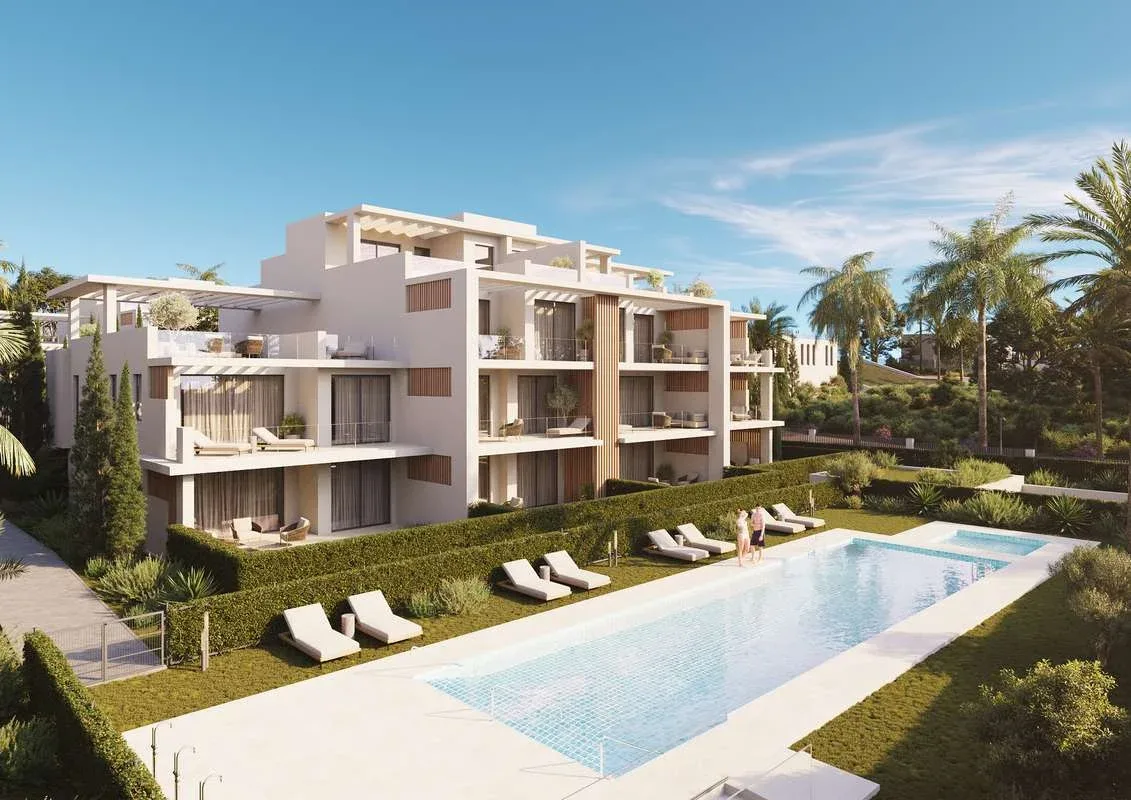
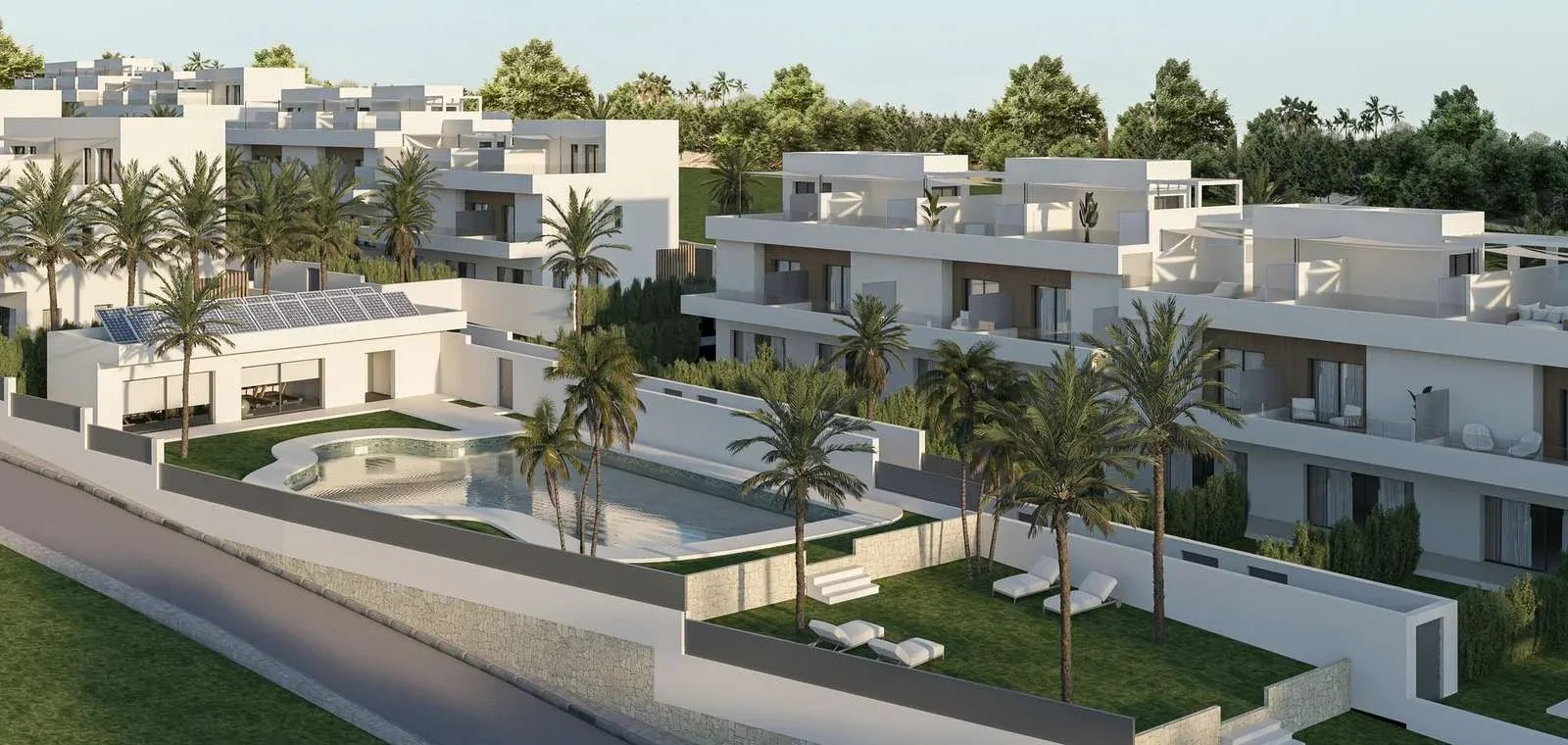


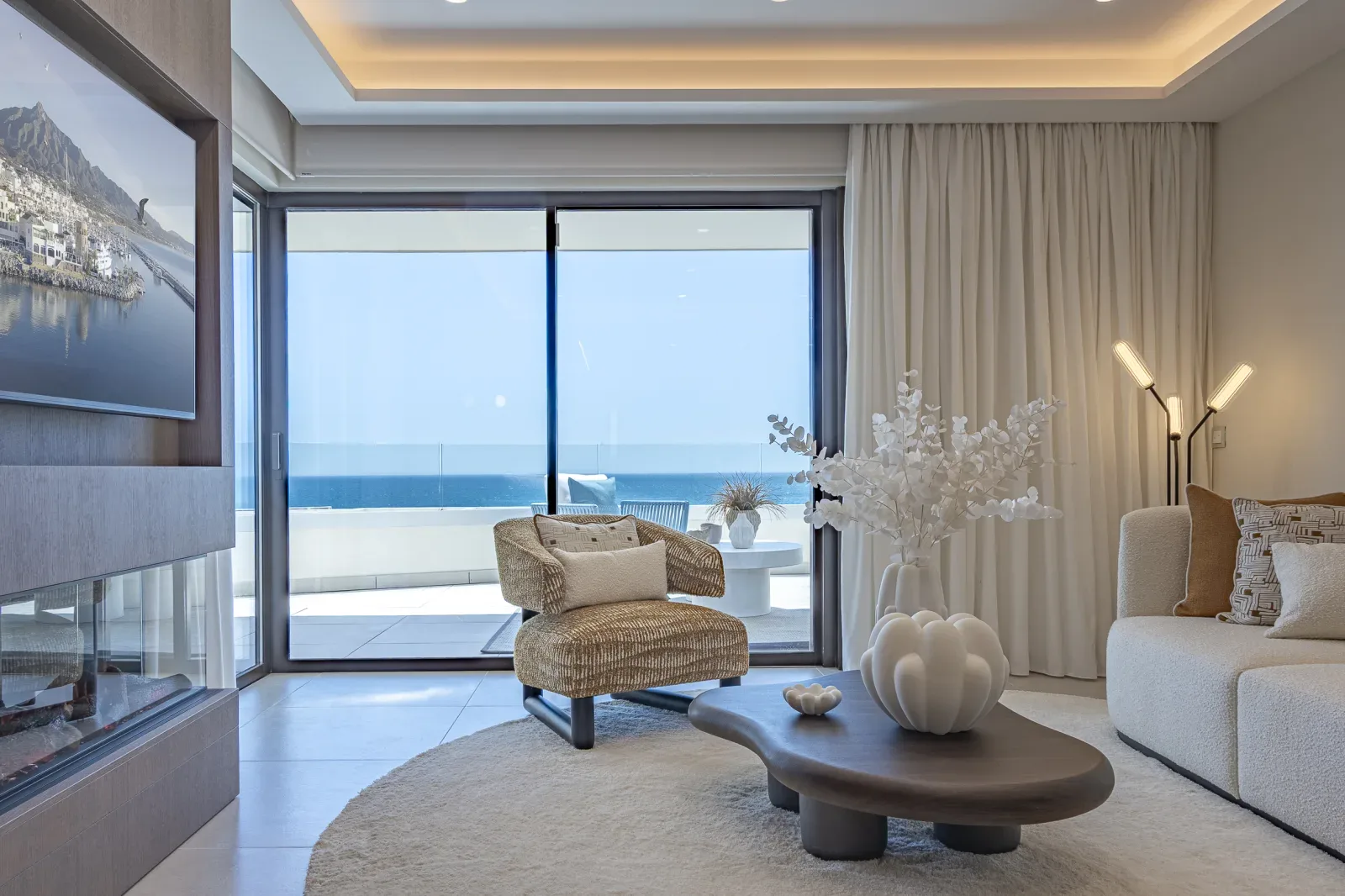

Handover day for a new build
When the building is finished the developer invites you to the handover, and this is the moment to be fussy. Walk through with a list, open every window and door, run every tap, test the air conditioning, check the terrace drainage and photograph anything that is not right. The snagging list is agreed before you sign, and the remaining items are fixed under warranty afterwards. Bring someone who does this often; two hours of attention here saves months of emails.
Where our buyers end up looking
Spain is not one market, and the advice that works in Alicante does not transfer to Málaga province. On the western Costa del Sol the question is usually narrowed to a handful of towns within forty minutes of each other, and the differences are about daily life rather than the sea view.
We work in Estepona, and the reason buyers keep landing here is that it still functions as a town outside August: around 67,000 residents, a restored old town where the alleys are hung with flowers, 21 kilometres of coastline, Málaga airport 84 kilometres away and Gibraltar 45. Marbella is half an hour up the road when you want it, and priced accordingly.
What to bring on a viewing trip
- Passport, and your NIE if it has already been issued
- A shortlist with the community fees you have asked for in writing
- Your lawyer's contact details, appointed before you travel
- Proof of funds or a mortgage agreement in principle
- A note of the afternoon sun direction for each property
- Time to see at least one town in the evening, not only at midday
After the purchase: what you owe every year
Ownership brings a short list of recurring obligations, and they are easier to set up once than to repair later.
| What | Who pays |
|---|---|
| IBI property tax, rubbish collection | every owner, annually to the town hall |
| Community fees | every owner in a development, monthly or quarterly |
| Non-resident tax return, form 210 | owners not tax resident in Spain: 24% non-EU, 19% EU/EEA |
| Spanish income tax and form 720 | owners who become tax resident here |
If you plan to let the home out when you are not using it, holiday letting in Andalusia needs the property registered in the regional tourism register, and the community statutes can restrict it. A national registration scheme introduced in July 2025 was later annulled by the Supreme Court, which found the state had encroached on regional powers, so the regional rules are the ones that count.
Mistakes we see when foreigners are buying property in Spain
- Paying a reservation into a private account. Money goes to the agency's or lawyer's client account, never to someone's personal one.
- Skipping the licence of first occupation. Without it a home cannot legally be occupied or connected to utilities in the normal way.
- Believing the listed size. Built, useful and terrace square metres are different numbers, and marketing likes the biggest one.
- Ignoring the community. Its accounts, its levies and its rules on letting decide what your home costs and what you may do with it.
- Leaving tax to the end. Whether you buy personally or otherwise, and when you arrive in the tax year, changes what you pay for years.
Nothing in a Spanish purchase has to be rushed. Every party that wants you to rush is telling you something.
Your next steps
- Before you fly Apply for the NIE, get a quote from an independent lawyer, and set a realistic budget including the 10 to 13% in costs.
- Viewing trip See the areas at different times of day, not only the homes. Ask for community fees in writing for every property you shortlist.
- Offer accepted Reservation into a client account, legal checks started, mortgage application in parallel.
- Two to four weeks later Private contract and deposit, with completion date and penalties agreed.
- Completion Notary, balance, keys. Then registration, utilities and direct debits.
Frequently asked questions
Can foreigners buy property in Spain?
Yes. There is no restriction on foreign ownership, whether you live in the EU or outside it, and you do not need a residence permit to buy. You do need an NIE number, a Spanish bank account and, in practice, your own lawyer.
How much are the costs of buying property in Spain?
Budget 10 to 13% on top of the price in Andalusia. A resale pays 7% transfer tax; a new build pays 10% VAT plus 1.2% stamp duty. Notary, land registry and legal fees come on top, and a mortgage adds its own valuation and arrangement costs.
What is an NIE and how do I get one?
The NIE is your Spanish foreigner identity number, and nothing happens without it: no purchase, no utilities, no tax return. You apply at the Spanish consulate that covers your address at home, or at a police station in Spain, and you can also do it through your lawyer with a power of attorney.
Do I need a Spanish lawyer to buy a house in Spain?
It is not a legal requirement, but buy without one and nobody is checking your interests. An independent lawyer checks the land registry entry, debts, planning status, licences and community rules, and drafts or reviews the private contract before you pay anything.
How does buying off-plan work in Spain?
You reserve the unit, sign a private purchase contract with a payment schedule, and pay in stages while the building goes up. By law the developer has to hold your payments in a special account and secure them with a bank guarantee or insurance policy, so the money comes back with interest if the home is not built or finished as agreed.
How long does buying a property in Spain take?
For a resale, six to eight weeks from accepted offer to notary is normal, and faster if you pay cash and the paperwork is clean. A mortgage adds several weeks. An off-plan purchase follows the building, which usually means 12 to 30 months to completion.
What taxes do I pay after buying property in Spain?
Every owner pays the annual IBI property tax and community fees. If you are not tax resident in Spain, you also file an annual non-resident tax return on form 210, taxed at 24% for non-EU owners and 19% for EU and EEA owners, on rental income or on a notional income for your own use.
Is it better to buy a new build or a resale in Spain?
A resale can be yours in weeks and you see exactly what you get. A new build is bought to a specification, with payments secured by a bank guarantee, a ten-year structural warranty and current insulation standards. In Estepona new builds were asking only about 3% more per m² than resales in September 2026, which is why many of our buyers choose new.
Sources & official links
- Agencia Tributaria – Non-resident income tax without permanent establishment (checked 20.09.2026)
- Agencia Tributaria – 3% withholding when the seller is a non-resident (form 211) (checked 20.09.2026)
- Agencia Tributaria – Form 210 for non-resident owners (checked 20.09.2026)
- Agencia Tributaria – Form 720, assets held abroad (checked 20.09.2026)
- BOE – Building Act 38/1999, first additional provision (guarantees for off-plan payments) (checked 20.09.2026)
- EUR-Lex – EU Succession Regulation 650/2012 (checked 20.09.2026)
- Consulate General of Spain in Manchester – Consular services, including NIE (checked 20.09.2026)
- Plataforma One (Spanish government) – Abolition of the investor visa (checked 20.09.2026)