
Guests Book 7 Weeks Ahead and Stay Almost 6 Nights

Guests book seven weeks ahead and stay almost six nights: in the twelve months to August 2026, holiday-let guests in Estepona booked 51 days before arrival on average and stayed 5.9 nights. That is the longest stay of the six towns between Marbella and Sotogrande.
For owners it means a calendar you can plan, fewer changeovers and a calmer operation. If you look after your holiday home from abroad, you know weeks in advance when guests are coming and can fit your own stays around them with ease. The figures come from our own market analysis over 36 months.
51 days ahead and 5.9 nights per stay in Estepona
Guests in Estepona plan early and stay long, and occupancy is the highest on the coast. The key figures:
| Estepona, holiday lets | Value | As of |
|---|---|---|
| Booking lead time | 51 days | August 2026 |
| Stay per booking | 5.9 nights | August 2026 |
| Minimum stay, typical | 4 nights | August 2026 |
| Occupancy over the year | 41 to 67% | August 2026 |
| Occupancy in summer | 57 to 81% | August 2026 |
| Occupancy in winter | 30% | August 2026 |
Lead time is the time between booking and arrival, the stay is the number of nights per booking, each as an average across all holiday homes in the municipality. A little over seven weeks of lead time means the calendar for the coming months fills early.

The longest stays of the six towns
At 5.9 nights, guests stay longer in Estepona than in any other town from Marbella to Sotogrande. On lead time, Estepona at 51 days is practically level with Marbella at 52 days:
| Town | Stay per booking | Booking lead time |
|---|---|---|
| Estepona | 5.9 nights | 51 days |
| Benahavís | 5.7 nights | 44 days |
| Marbella | 5.0 nights | 52 days |
| Casares | 4.9 nights | 41 days |
| Manilva | 4.8 nights | 47 days |
| San Roque (Sotogrande) | 4.3 nights | 48 days |
The minimum stay points the same way: typically four nights in Estepona, as in Benahavís, against three in Marbella, Casares, Manilva and San Roque. Estepona attracts guests who come for more than a weekend. A longer minimum stay suits guests planning a full holiday week, and the measured length of stay of almost six nights shows that those guests do come.
Estepona and Marbella: same lead time, longer stays
Guests book equally early in both towns but stay almost a night longer in Estepona. That makes a real difference in day-to-day running. Per 100 booked nights there are around 17 changeovers in Estepona and around 20 in Marbella, around 15% fewer:
- Fewer cleans: every changeover means a final clean, laundry and preparing for the next guest.
- Fewer handovers: less frequent check-in and check-out, less coordination with the manager.
- Fewer gaps: single nights between two stays, which are hard to let, occur less often.
- A calmer development: longer stays, less coming and going, pleasant for the whole development.
Occupancy adds to it: in the twelve months to August 2026 holiday homes in Estepona were 41 to 67% booked, in Marbella 38 to 63%. And the New Build median on 18 September 2026 was €5,145 per m² in Estepona and €7,491 in Marbella. Estepona was around 31% lower, with longer stays and higher occupancy.
Why do guests stay so long in Estepona?
Because Estepona is more than a beach: a lively town, a long coastal path and mild weather all year. Anyone who comes here has enough to discover for a whole week, from the beach in the morning to the hinterland in the afternoon and dinner at the harbour.
Old town, promenade and 21 kilometres of coast
Estepona has a restored old town with flower-filled lanes, a long beach promenade, a harbour with restaurants and 21 kilometres of coast. A coastal path of more than 21 kilometres for walkers and cyclists links the beaches of the municipality, according to the town hall.
A town that lives all year round
With almost 80,000 residents, restaurants, markets and shops are open all year. In winter holiday homes in Estepona were 30% booked, the highest winter figure of the six towns.
16.8 degrees in January
At the Málaga airport weather station the average daily high is 16.8 degrees in January and 19.6 degrees in March, measured over 1981 to 2010. The mild climate makes the Costa del Sol attractive for longer stays outside summer too.
The season in Estepona: when guests come
July is the strongest month, and spring and autumn are well booked too. In the twelve months to August 2026 a typical holiday home in Estepona was 63% booked in July and 58% in August. June and September were at 49 and 48%, May and October at 45 and 44%, April at 39%.
Winter stays lively as well. In February holiday homes were 36% booked, in November 32%, in March 30%, and even in December and January 27 and 26%. The nightly rate followed the season: around €238 in July, around €150 in the winter months, €223 on average in summer and €151 in winter.
For owners this creates a clear rhythm. The summer months carry the revenue, spring and autumn add to it with golfers, walkers and guests who enjoy the mild months in between, and winter leaves room for your own weeks or longer stays by winter visitors. Setting your own dates early in the year lets you plan the letting around them.
A typical guest in Estepona: from booking to departure
A little over seven weeks of lead time and almost six nights per stay add up to a calm, predictable rhythm. This is a typical stay from the owner's point of view:
- 51 days before Booking received, the manager confirms and schedules cleaning and handover.
- Before arrival The home is prepared, bed linen and towels are ready.
- Arrival Check-in and welcome; the manager reports the guest details within 24 hours under Royal Decree 933/2021.
- Almost six nights Beach, promenade, trips into the hinterland, dinner at the harbour.
- Departure Check-out, final clean and laundry, the home is ready for the next guest.
If you use the holiday home yourself, the long lead time helps: occupancy for the coming weeks is known early, and your own stays fit neatly into the gaps, especially in the quieter months from November to March.
New Builds and holiday lets: ready for long stays
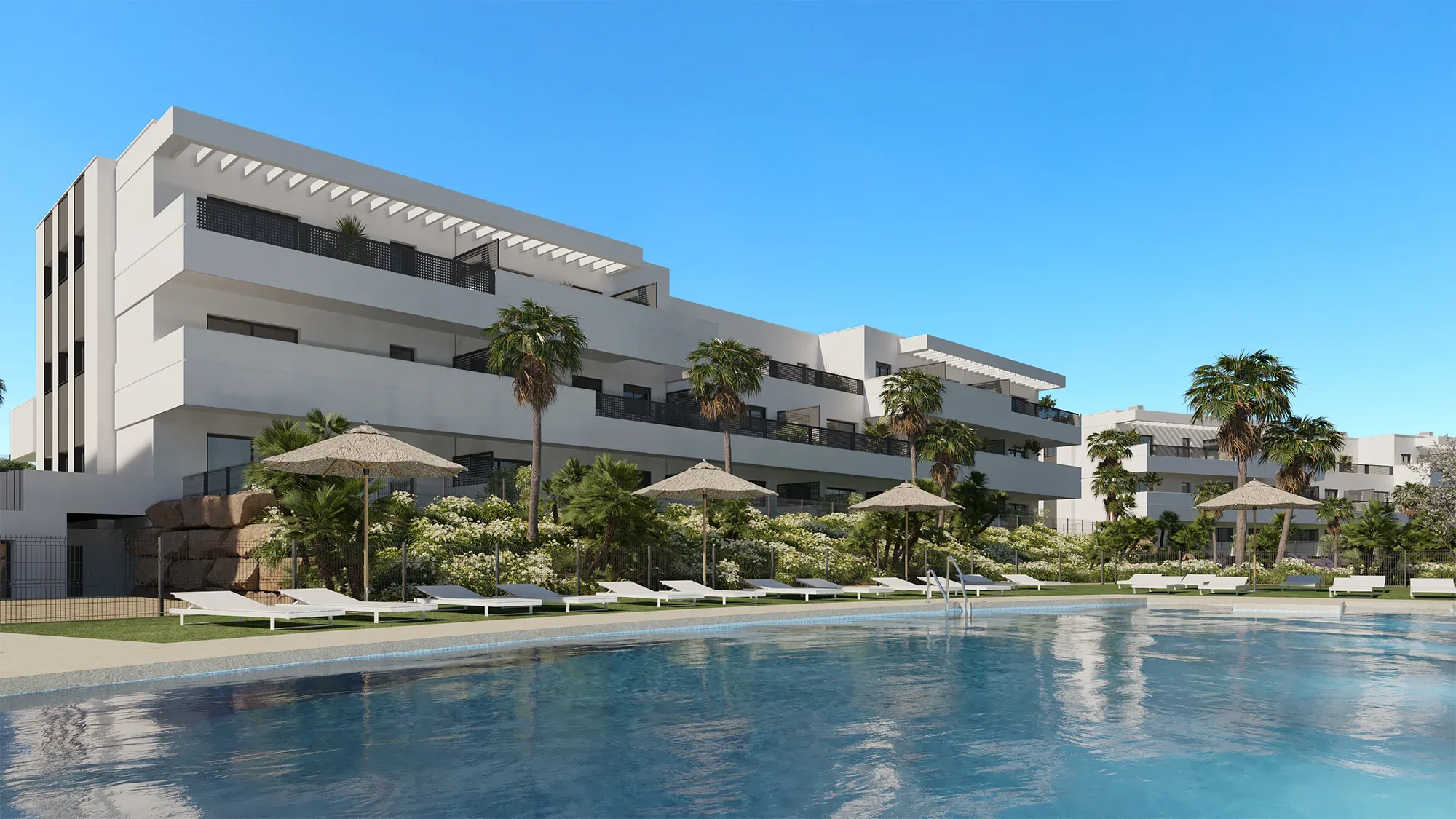
Anyone staying almost a week wants to feel at home, and a new apartment offers exactly that. A fully equipped kitchen, a washing machine, air conditioning for summer and winter, fast internet for guests who work now and then, and a terrace for breakfast outside. New developments come with a communal pool and gardens, which make the difference on longer stays in particular.
A new home meets the specification required by Andalusian Decree 28/2016 as amended by Decree 31/2024 from day one. In a new development the first owners also shape the rules on holiday lets themselves. A local manager handles listings, pricing, guest communication, check-in, cleaning and laundry, and with longer stays the effort per booking is noticeably smaller. Ask two or three managers for offers and for references near the development you are interested in. Registration and taxes are covered in our guide Invest in Spanish property.
What does it mean for investors?
Booked early, staying long, well occupied: Estepona offers a predictable holiday-let market with less effort per euro of revenue. A holiday home let all year round took typically around €28,000 in the twelve months to August 2026, around €47,000 in the upper quarter. Value growth comes on top: the public price index for Resales in Estepona rose by 98.7% in five years, an average of 14.7% a year. Past figures, not a forecast.
If you would rather let without any guest changeovers, long-term letting is the alternative: long-term rents in Estepona were around €21 per m² a month in August 2026, 117.7% above the level five years earlier, with a gross rental yield on Resales of 5.05%. For holiday letting combined with your own weeks, the holiday home remains the more flexible choice.
What a holiday home in Estepona takes month by month is shown in the note What a holiday home earns in Estepona. Current projects are listed under New developments in Estepona.
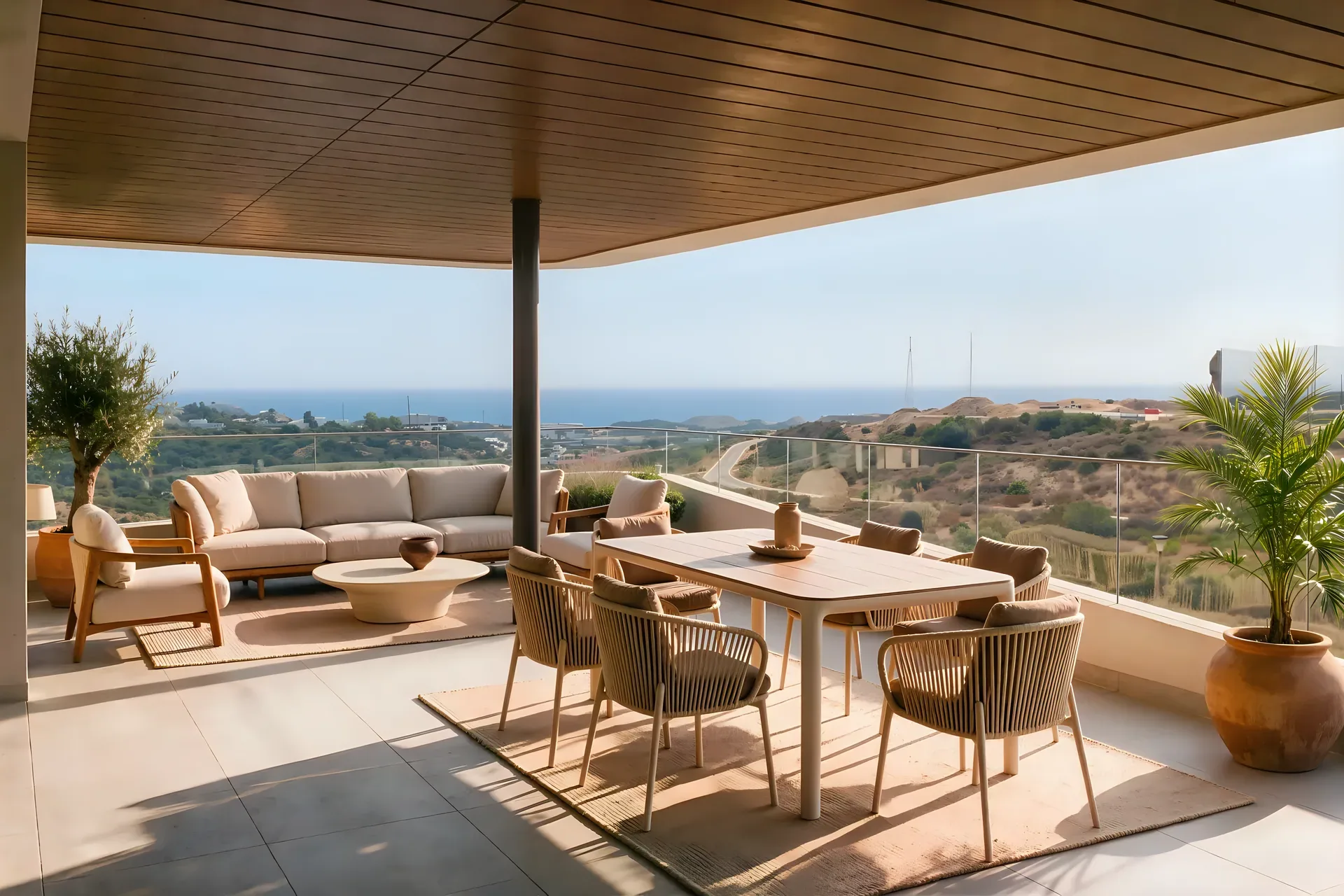
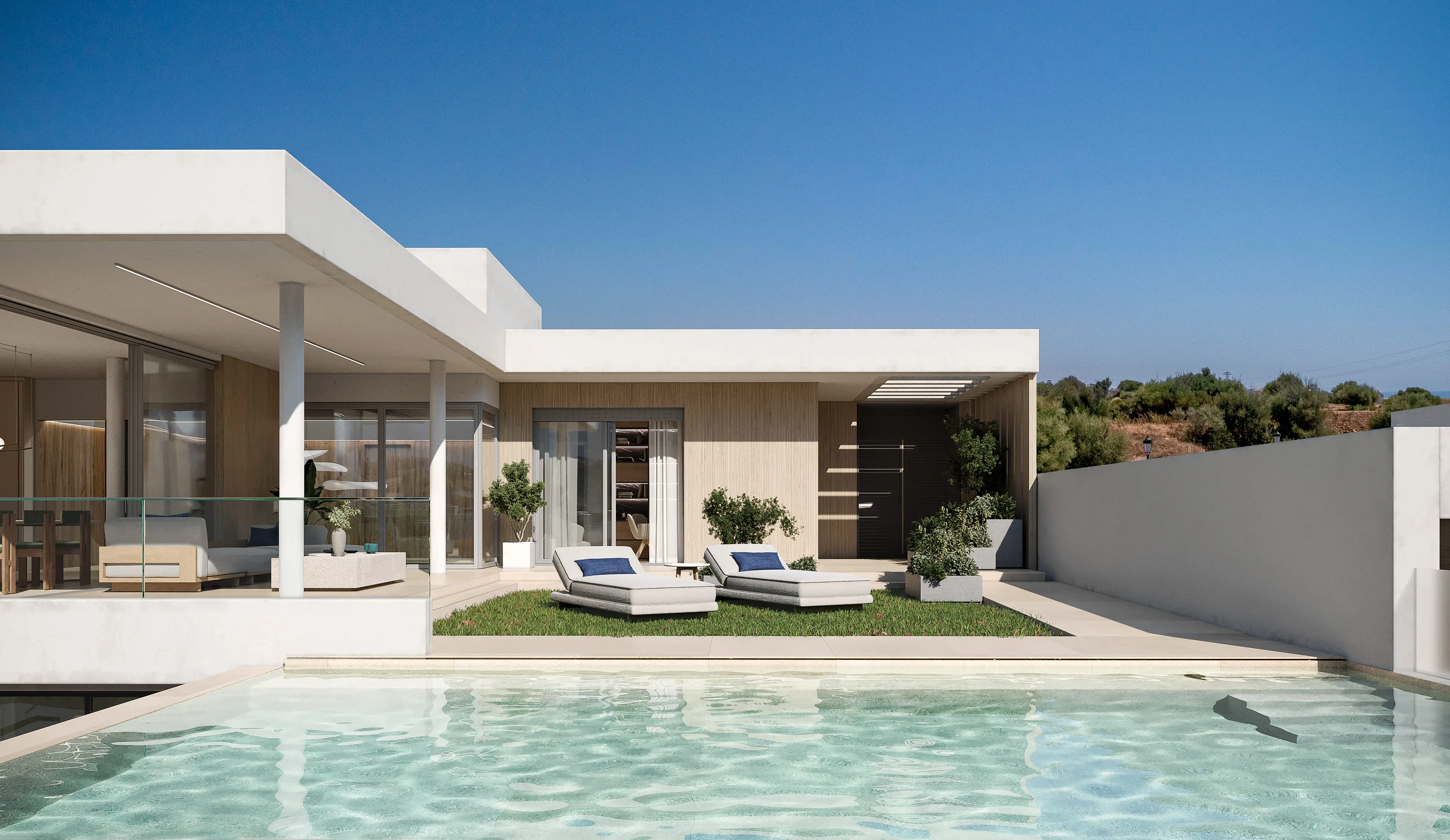
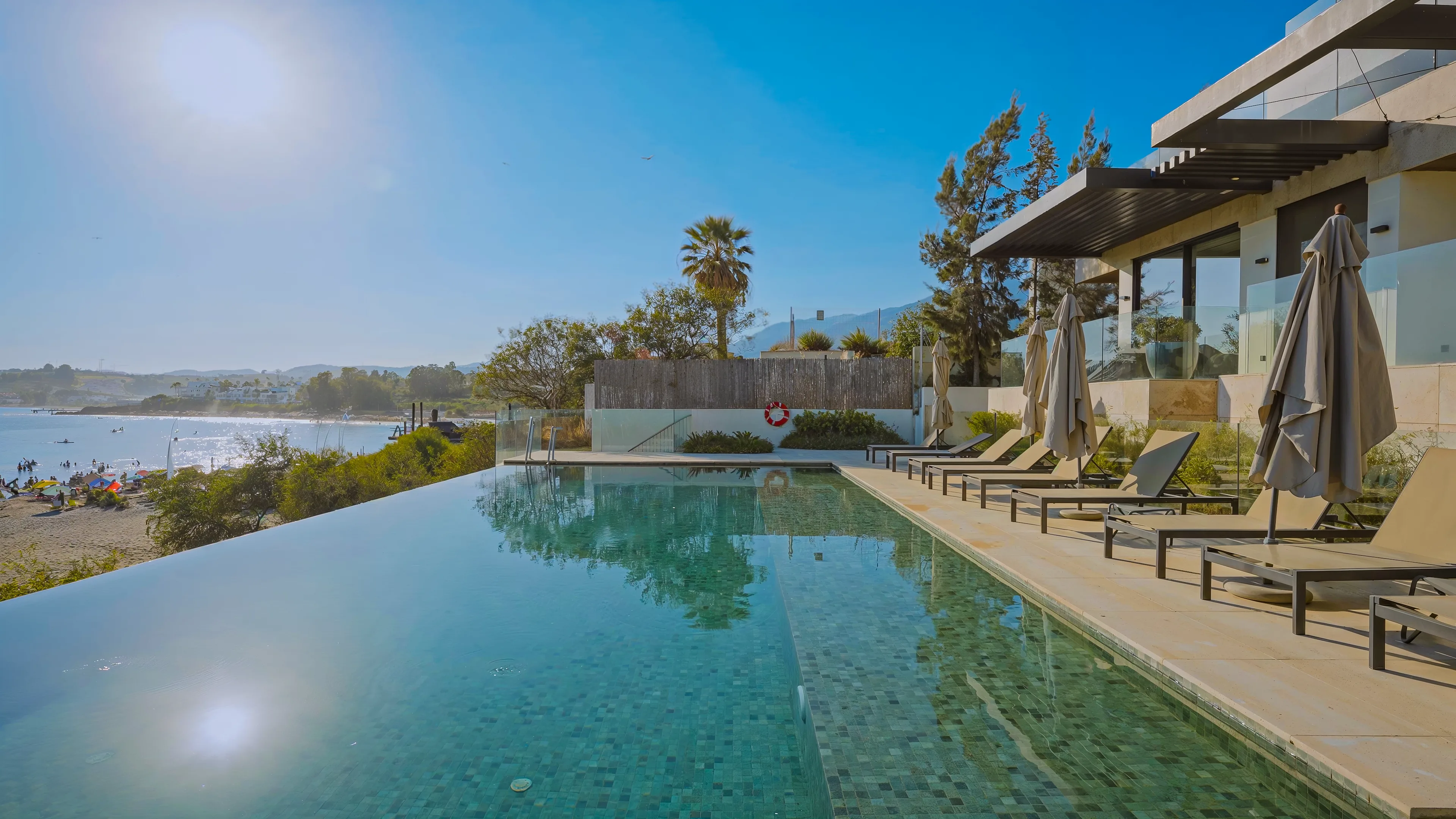
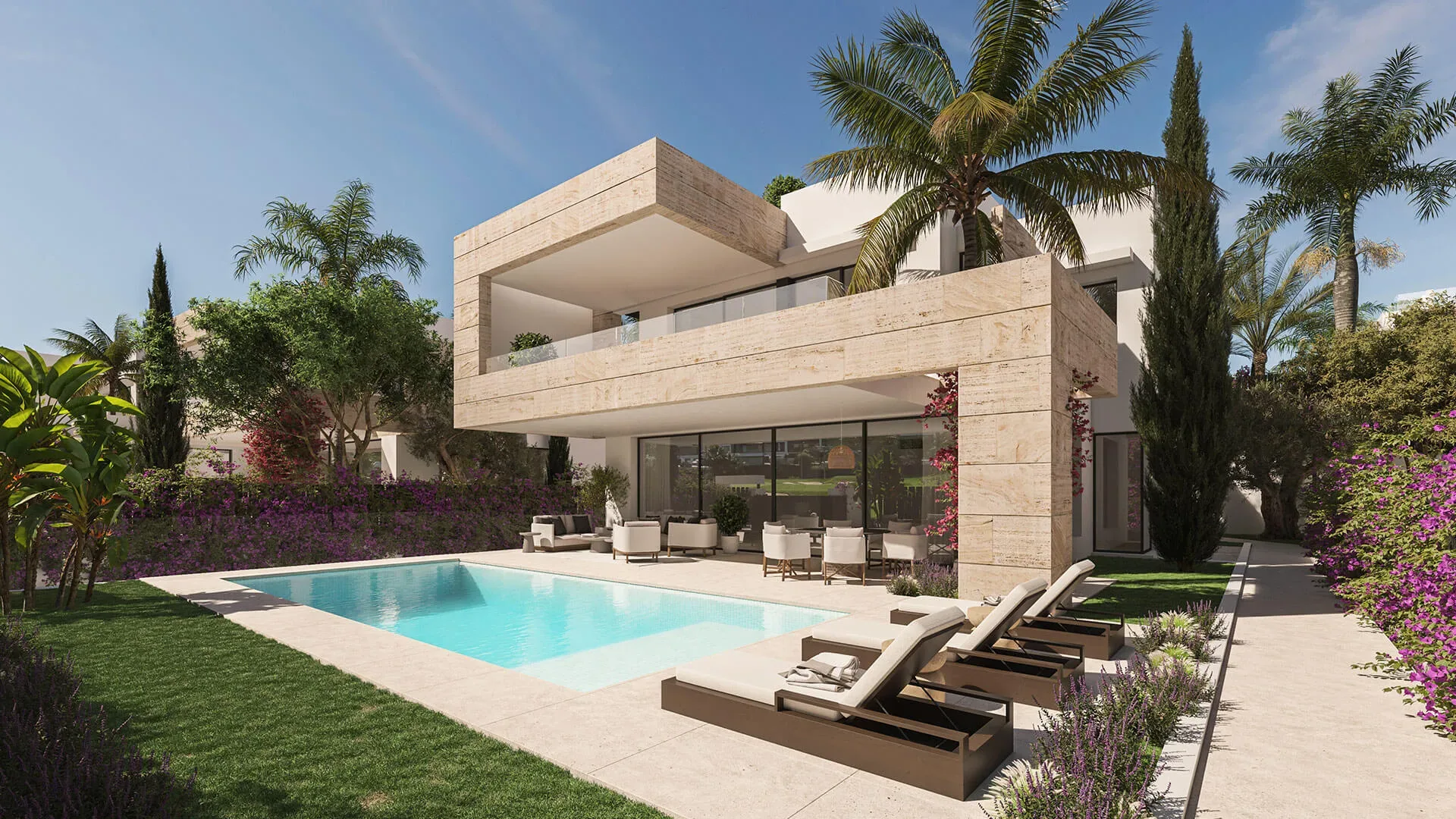
New developments in Estepona

Where the figures come from
Holiday lets: our own market analysis of all whole homes listed as holiday accommodation in each municipality, 36 months to August 2026. Lead time, length of stay and minimum stay are market values for each municipality over the twelve months to August 2026. Occupancy is the share of offered nights that were booked, shown as a range from typical to upper quarter. Changeovers per 100 nights are 100 divided by the length of stay. Sotogrande is part of the municipality of San Roque. New Builds: our own survey, median asking price per m², 18 September 2026.
Frequently asked questions
How far ahead do guests book a holiday home in Estepona?
51 days on average, a little over seven weeks. That is the result of our own market analysis for the twelve months to August 2026; in Marbella it was 52 days.
How long do guests stay in a holiday home in Estepona?
5.9 nights on average, longer than in any of the other five towns between Marbella and Sotogrande. In Marbella it was 5.0 nights.
What do long stays mean for owners?
Fewer changeovers. At 5.9 nights per stay there are around 17 changeovers per 100 booked nights, at 5.0 nights as in Marbella around 20. That means fewer cleans, fewer handovers and a calmer calendar.
What is the minimum stay in Estepona?
Typically four nights, measured across all holiday homes in the municipality. In Marbella, Casares, Manilva and San Roque it was three nights.
When are holiday homes in Estepona best booked?
In summer, at 57 to 81%. Over the year occupancy was 41 to 67% and in winter 30%, in each case the highest of the six towns.
Sources & official links
- BOJA No. 24 of 2 February 2024 – Decree 31/2024 on tourist homes (checked 21.09.2026)
- BOE – Royal Decree 933/2021 on guest registration (checked 21.09.2026)