Invest in Spanish Property: The Costa del Sol in Figures
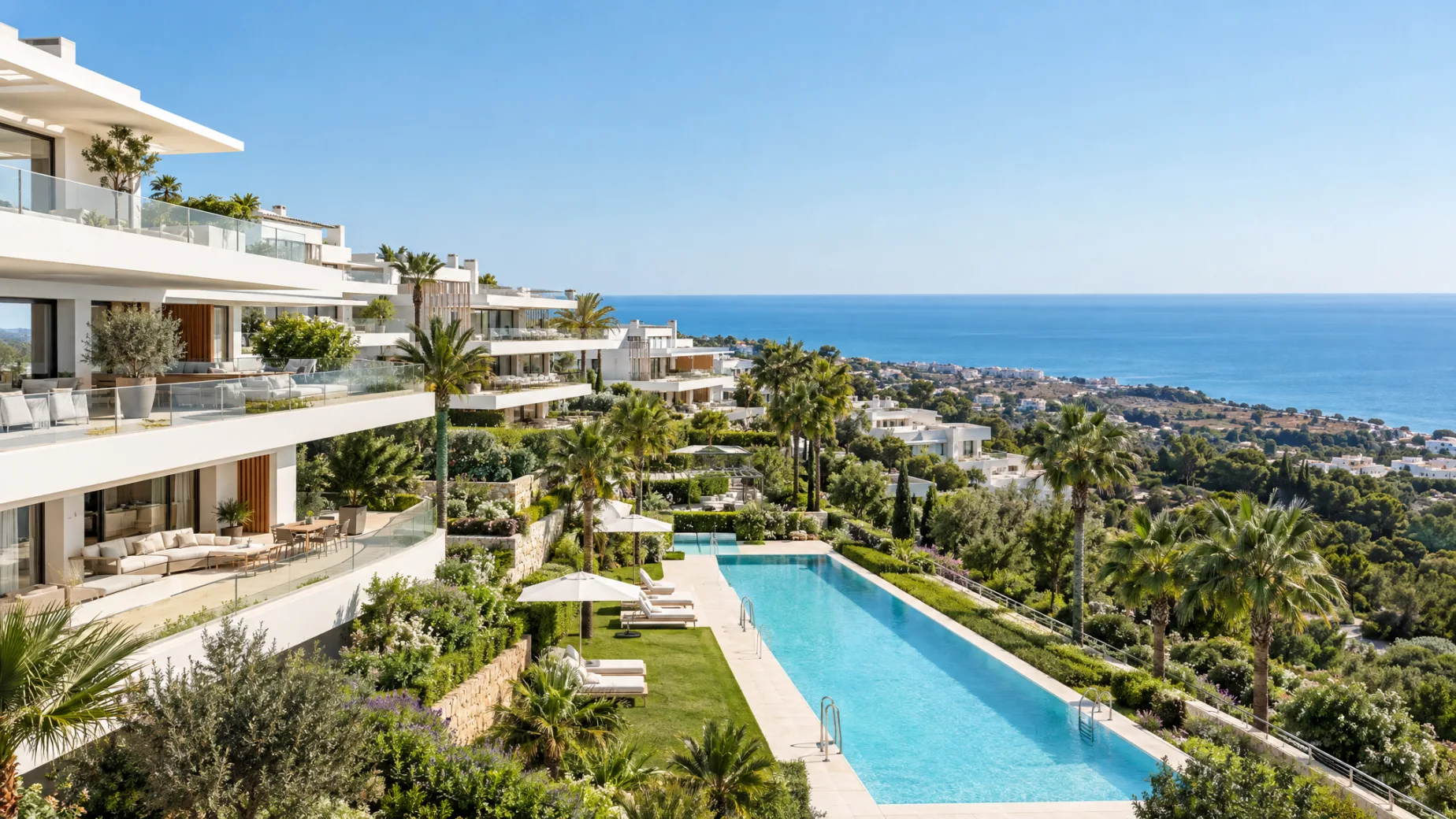
Sunshine for most of the year, beaches, golf, an international community and a town that keeps growing: the western Costa del Sol combines a lifestyle that people want with a property market that has rewarded owners for a decade. For many investors, the decision to invest in Spanish property starts with a holiday and ends with a spreadsheet, and on this part of the coast the numbers are as attractive as the view.
We live in Estepona and have worked with all the developers from Sotogrande to Marbella since 2019. We track the New Build supply of the western coast ourselves, alongside the public price index for Resales and the rental market, and this guide sets out what those figures show, town by town, together with the taxes and the buying process that matter to investors. We make no forecasts: every number here is a measured value with its date.
Why investors choose the western Costa del Sol
The western Costa del Sol combines strong demand from buyers and tenants from all over Europe with a limited coastline and a year-round life. Those three things together are what make a property market work for investors.
Demand comes from several directions at once. Northern Europeans want a second home in the sun; retirees and remote workers want to live here for most of the year; families move for the schools, the climate and the lifestyle; and holidaymakers fill the summer months. Estepona's population grew from around 67,000 in 2016 to almost 80,000 in 2025, an increase of 19.4%, which means more people who need a home all year, not only for the season.
Supply, by contrast, is shaped by geography and law. The coast is a narrow strip between the sea and the mountains of the Sierra Bermeja, and the coastal law keeps a protected strip along the beach free of new homes. New developments are built on the land that planning allows, and the best locations with sea views are finite.
And the towns are investing in themselves. According to the town hall, Estepona has repaid its inherited debt, has funded its own hospital, has almost completed a coastal path of more than 21 kilometres and is investing around €27 million in its 2026 budget, while property tax for registered households is falling. A town that improves the life of its residents supports the value of the homes in it.
Value growth by town: the last ten years
Over ten years to August 2026, Estepona recorded the strongest value growth on the western Costa del Sol: 194.1%. Our own analysis of the public price index for Resales shows how the towns compare:
| Town | 1 year | 10 years |
|---|---|---|
| Estepona | +17.4% | +194.1% |
| Casares | +2.8% | +184.5% |
| Benahavís | +7.1% | +170.2% |
| Marbella | +4.0% | +151.3% |
| Manilva | +13.5% | +140.4% |
| Sotogrande | +11.6% | +90.5% |
Estepona leads over one year and over ten years. Over five years, Benahavís was slightly ahead with 103.6%, with Estepona close behind at 98.7%, an average of 14.7% a year. These figures measure Resale prices, the homes that change hands on the market, and they describe the past; they are not a promise for the future.
What stands out is the consistency: Estepona is not the top performer in a single lucky year, but across short and long periods alike. The town has grown from a quieter neighbour of Marbella into one of the most sought-after places on the coast, while its prices per square metre have stayed clearly below Marbella's.

Rental yields and rents on the Costa del Sol
Gross rental yields on the western Costa del Sol ranged from 4.26% to 5.47% in August 2026, and rents in Estepona have almost tripled in ten years. The rental market is one of the pillars of the investment case.
On our own analysis, the gross rental yield on Resales was 5.05% in Estepona, 4.75% in Marbella and 4.76% in Benahavís, with Manilva at 5.41%, Casares at 5.47% and Sotogrande at 4.26%. Long-term rents in Estepona averaged €21 per square metre a month, against €23.7 in Marbella, and they rose by 3.8% in the last year, 117.7% in five years and 190.3% in ten years.
Within Estepona, yields vary by neighbourhood. In August 2026, Costa Natura reached 6.81% and Benamara–Atalaya 5.99%, the centre 5.15%, Bahía Dorada 4.91% and Selwo 4.39%. Neighbourhoods with lower entry prices tend to yield more, while those with the strongest value growth, such as Selwo, reward owners more through the value of the home.
The comparison with Marbella is instructive. There, long-term rents rose by 8.0% in the last year, 92.7% in five years and 137.0% in ten years to August 2026, so rents in Estepona have grown faster over five and ten years while starting from a lower level. For an investor, that combination of a lower entry price and faster rent growth is what has kept Estepona's gross yield above Marbella's, at 5.05% against 4.75% in August 2026. It is also a sign of how many people want to live in the town all year, which is the foundation of any long-term rental market.
These are gross figures on Resales, before costs and taxes. For a realistic plan, subtract community fees, property tax, insurance, maintenance and, for holiday lets, management and cleaning, and then apply the tax rules for your country of residence explained below.
New Build prices: what investors pay today
In Estepona, a New Build costs only 2.9% more than a Resale, and around 31% less than in Marbella. Our own survey of all developers' price lists on 18 September 2026 shows the New Build median at €5,145 per square metre in Estepona and €7,491 in our Marbella market area.
Estepona also has the largest choice: 840 priced New Build units in 118 projects, more than three times as many as any other town on the western coast. Townhouses were the least expensive property type at €4,927 per square metre, apartments cost €5,130 and villas €5,753. For €500,000, the median buys around 97 square metres of New Build in Estepona and around 67 in Marbella.
For an investor, a small New Build premium is a strong position. You pay little more than the Resale price for a home built to current standards, with modern insulation, air conditioning, community facilities and legal warranties, and with nothing to renovate. Such homes are easier to let and cheaper to maintain, which supports the net return year after year.
The new developments in Estepona show the current projects, and our guide to new developments on the Costa del Sol compares the towns in detail.
Ways to invest in Spanish property on the coast
There are three main strategies, and each suits a different investor. You can also combine them over time.
- Long-term rental: a steady income from tenants who live here all year, with the lowest management effort. Estepona's year-round population supports this market.
- Holiday rental: higher rents per night in the season, with registration in the Andalusian tourism register and a local management company for guests and cleaning.
- Own use plus rental: your own weeks in spring and autumn, rental in the months you are away, and the home as a future base for retirement or a move.
Buying off-plan adds a fourth dimension: you reserve at today's price, pay in stages during construction and receive a new home when it is completed. During the construction period there is no rental income, but there is also no imputed income tax, and the payments are protected by a bank guarantee or insurance in your name.
Whichever strategy you choose, the location decides most of the result. Close to the beach, the old town or the golf course, with good facilities and parking, is where tenants and guests look first. Our guide to buying off-plan in Spain explains the protections for stage payments.
Long-term rental: the year-round market in Estepona
Long-term rental is the calmest way to invest in Spanish property on the coast, and Estepona's year-round population makes it work. Tenants here are residents who live, work and send their children to school in the town.
The tenants of the western Costa del Sol are as international as the owners: families who have moved for the schools and the climate, remote workers, professionals working along the coast, and retirees who rent while they look for a home to buy. A modern New Build with a terrace, air conditioning, a communal pool and parking is exactly what this market looks for, and it keeps tenants for longer.
On our own analysis, long-term rents in Estepona averaged €21 per square metre a month in August 2026, so an 80 m² apartment rents for around €1,680 a month. Over ten years, rents rose by 190.3%, in step with the value of the homes themselves.
A local agent or property manager finds and vets tenants, prepares the contract under Spanish tenancy law and handles the day-to-day contact. For an owner who lives abroad, that turns the property into a steady income with very little effort.

Holiday rental by town: Estepona has the highest occupancy
Of the six towns between Marbella and Sotogrande, Estepona had the highest holiday-let occupancy and the longest stays in the twelve months to August 2026. Our own market analysis measures every whole home listed as a holiday let in each town, over 36 months. Ranges run from typical to upper quarter. For anyone who wants to invest in Spanish property and let it to holiday guests, these are the numbers that matter most.
| Town | Occupancy over the year | Average stay |
|---|---|---|
| Estepona | 41 to 67% | 5.9 nights |
| Marbella | 38 to 63% | 5.0 nights |
| Benahavís | 35 to 59% | 5.7 nights |
| Casares | 31 to 54% | 4.9 nights |
| San Roque (Sotogrande) | 31 to 52% | 4.3 nights |
| Manilva | 27 to 53% | 4.8 nights |
In Estepona the typical nightly rate was €174 over the year and €223 in summer, when homes were 57 to 81% occupied. A home let all year round took typically around €28,000 in revenue, around €47,000 in the upper quarter, before costs and tax, and that figure rose by 8.8% in a year. Guests booked 51 days ahead on average. Supply is also shrinking: the number of active holiday lets fell by 12 to 24% in a year in all six towns, in Estepona by around 15% to 2,272. The registration and licence requirements are the likely reason, and for owners who let with a registration number it means less competition.
Holiday rental: registration and management
Holiday rental earns more per night in the season, and a local manager makes it simple to run from abroad. The western Costa del Sol has guests in every season, from golfers in spring and autumn to families in summer and winter visitors escaping the northern cold.
Before the first guest arrives, the home is registered in the Andalusian tourism register. In apartment buildings, the owners' association can decide on holiday rentals by a majority of three fifths of owners and shares, and such decisions do not apply retroactively to homes that are already registered. When you choose a development for holiday rental, ask how its rules handle this, so your plan fits from the start.
A management company takes care of the listing, the guests, check-in, cleaning, laundry and the tourist tax paperwork, usually for a percentage of the rental income. A home close to the beach or the old town, with a pool, a terrace and good photos, is what performs best.
Buying costs for investors in Andalusia
In Andalusia, a New Build carries 10% VAT and 1.2% stamp duty, and a Resale 7% transfer tax. Notary and land registry fees follow official scales and are modest by international standards.
On a New Build, VAT is paid with each stage payment, and stamp duty at the notary on completion. The costs of acquisition are added to the purchase price when you later calculate the capital gain, which reduces the taxable gain. Our complete guide to buying property in Spain explains every item and who pays it.
Taxes on rental income for non-residents
Rental income from Spanish property is taxed in Spain at 19% for EU and EEA residents after costs, and at 24% on the gross rent for everyone else. The rules are set out in the Non-Resident Income Tax Act.
For EU and EEA residents, allowable costs such as community fees, property tax, insurance, repairs, interest and depreciation can be deducted before the 19% is applied. For residents of other countries, including the UK and the United States, the 24% applies to the gross rent without deductions. The return is filed on form 210; from the 2026 tax year, rental income is declared in the first twenty days of April of the following year.
Your home country will usually tax the same income too, with a credit for the Spanish tax under the double taxation treaty, so the income is not taxed twice. For an investor who later becomes resident in Spain, the ordinary Spanish income tax replaces the non-resident rules.
Our guide to non-resident property tax in Spain sets out every tax on a Spanish home, from the annual IBI to the returns on form 210, with examples.
Financing an investment property
Spanish banks lend to non-residents, and the law puts most of the mortgage's set-up costs on the bank. Financing part of the price can make sense for investors who want to keep capital free.
Under the Mortgage Credit Act, the bank pays the notary, the land registry and the administrative agency for the mortgage, as well as the stamp duty on the mortgage deed; you pay for the valuation. How much a bank lends, and on what terms, depends on your income, your country of residence and the property, and it differs from bank to bank. An approval in principle before you reserve tells you exactly what you can spend.
For off-plan purchases, the stage payments during construction come from your own funds, and the mortgage is usually signed at completion, when the home exists and can be valued. That timing suits many investors: capital during construction, a mortgage when the property starts to earn.
Our guide to Spanish mortgages for non-residents explains the offers, the ten-day reflection period and the protections in detail.
Capital gains when you sell
When a non-resident sells a Spanish property, the capital gain is taxed at 19%. The rate is fixed in the Non-Resident Income Tax Act, and the gain is the sale price minus the purchase price and the costs of both transactions.
At completion, the buyer withholds 3% of the price and pays it to the tax office as a payment on account of the seller's tax. The seller then files the final return, and if the 3% is more than the tax due, the difference is refunded. A municipal tax on the increase in land value, the plusvalía, is also due to the town hall on a sale.
For investors, the practical point is simple: keep every invoice from the purchase and from improvements, because each one reduces the taxable gain. A well-documented file makes the sale as straightforward as the purchase.
Annual costs and the imputed income tax
The annual costs of an investment property are clear and predictable: property tax, community fees, insurance, utilities and, when the home is not let, a small imputed income tax.
The municipal property tax, IBI, is based on the cadastral value; in Estepona the average bill was €556 in 2026, with an additional reduction for households registered in the town. Community fees depend on the development and its facilities. When a non-resident's home is not let, Spanish tax law imputes an income of 1.1% or 2% of the cadastral value, taxed at 19% or 24%; for a cadastral value of €150,000 at 1.1% and 19%, that is around €314 a year.
For off-plan buyers there is good news: under Article 85 of the Personal Income Tax Act, no income is imputed for a property under construction. The imputed income tax starts only when the home is completed. For a resident of Andalusia, the regional wealth tax is also reduced by 100%, one of the most attractive rules for people who move here.
Owning the property: why your own name is usually best
For a single investment property on the coast, owning it in your own name is usually the simplest and clearest structure. It keeps the tax rules predictable and the paperwork light.
Personal ownership means one owner, one set of Spanish tax rules and a clear title in the land registry. Couples can buy jointly in the shares they choose, and the ownership shares are recorded at the notary. Spanish law treats companies differently from private owners, and the Non-Resident Income Tax Act imposes a special annual levy of 3% of the cadastral value on property owned by entities resident in jurisdictions Spain classes as tax havens, which is why structures always need individual advice.
For inheritance planning, a Spanish will coordinated with the one at home makes things easy for your heirs, and Andalusia grants spouses, children and grandchildren a 99% reduction on inheritance tax. The EU Succession Regulation lets you choose the law of your nationality for your will.
From investment to home: moving to Spain later
An investment property on the Costa del Sol can also be a plan for the future: a home to retire to or to move into one day. Spain makes that step straightforward.
EU citizens can move and register as residents after three months. Non-EU citizens can use the non-lucrative visa, for people who live on their own means, or the digital nomad visa for remote workers, and people who move to Spain for work can opt for the Beckham regime, with a flat 24% on employment income up to €600,000 for six tax years. Our guides to the non-lucrative visa and the Beckham law explain both.
Becoming resident also changes the tax on your home: the imputed income tax on a main home falls away, and in Andalusia residents benefit from the 100% reduction of the regional wealth tax. An investment bought today can therefore become a very efficient home tomorrow.
A checklist before you invest
A good investment starts with a few clear questions, answered before you reserve.
- Your strategy: long-term rental, holiday rental, own use or a mix
- The location: beach, old town, golf, and the tenants or guests it attracts
- The price per square metre compared with other New Builds in the same town
- The gross yield in the neighbourhood, and your costs and taxes on top
- The community rules on holiday rental, if that is your plan
- The guarantee for stage payments and the completion date
- Your tax position in Spain and at home, with one adviser for both
- Your exit: resale market, long-term hold or future own use
Because we work with all developers from Sotogrande to Marbella, we can put projects side by side for you with the measured values of their neighbourhoods, so you compare like with like before you decide.
How to invest in Spanish property, step by step
The process is the same as any purchase in Spain, and it can be done almost entirely from abroad.
- Define the strategy and budget, including buying costs and a reserve.
- Get your NIE number and open a Spanish bank account.
- Shortlist developments with our figures for price, yield and value growth.
- Reserve the unit and let your independent lawyer check licence, guarantee and contract.
- Sign the purchase contract and make the stage payments, each one guaranteed.
- Complete at the notary, register the title and set up the utilities.
- Start renting: tourism registration or a long-term tenancy, with a local manager.
- File your taxes each year on form 210, with a local adviser.
A power of attorney lets your lawyer sign on your behalf, so you only travel for the visits you want to make. Our guide to the NIE number in Spain explains the first step, and our guide to Spanish mortgages for non-residents explains financing.
Diversifying: why investors add the Costa del Sol to a portfolio
For a portfolio, a home on the Costa del Sol adds something that shares and bonds cannot: a real asset you can use, rent and one day live in. To invest in Spanish property is to combine a return with a place.
Property on the western coast is priced in euros, driven by demand from across Europe and beyond, and supported by a year-round local economy. It produces income through rent, it can grow in value as the town grows, and it gives you a home for your own holidays. Few investments offer all three.
The costs of entry and exit are known in advance, the taxes are set out in law, and the legal protections for buyers of New Builds, from the bank guarantee to the ten-year structural warranty, are among the clearest in Europe. For investors who want a tangible asset with a lifestyle attached, that combination is hard to match.
The key, as always, is selection: the right town, the right neighbourhood and the right development. When you invest in Spanish property with the measured values of the neighbourhood in front of you, the decision rests on numbers, and the view from the terrace becomes a welcome bonus.
Why Estepona stands out for investors
Estepona combines the strongest ten-year value growth on the western coast with the largest New Build supply and prices well below Marbella. It is a rare combination.
The town lives all year, with almost 80,000 residents, a restored old town, 21 kilometres of coastline and a long seafront promenade. That year-round life supports the long-term rental market, while the beaches, the golf courses and the old town attract holiday guests in every season. Málaga airport is 84 kilometres away and Gibraltar 45, so owners and guests arrive easily.
For investors, the figures tell the story: 194.1% value growth in ten years, rents up 190.3% in ten years, a gross yield of 5.05%, and New Builds only 2.9% above the Resale index. The new developments in Estepona show the projects available today.
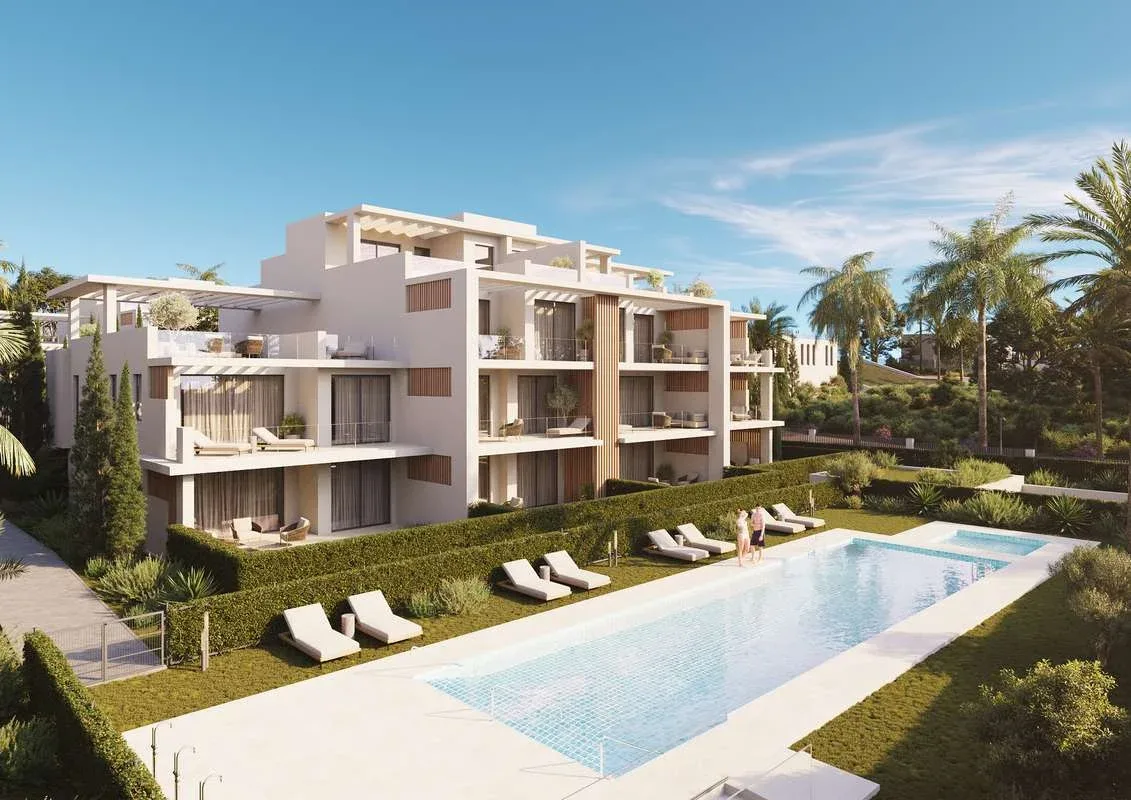
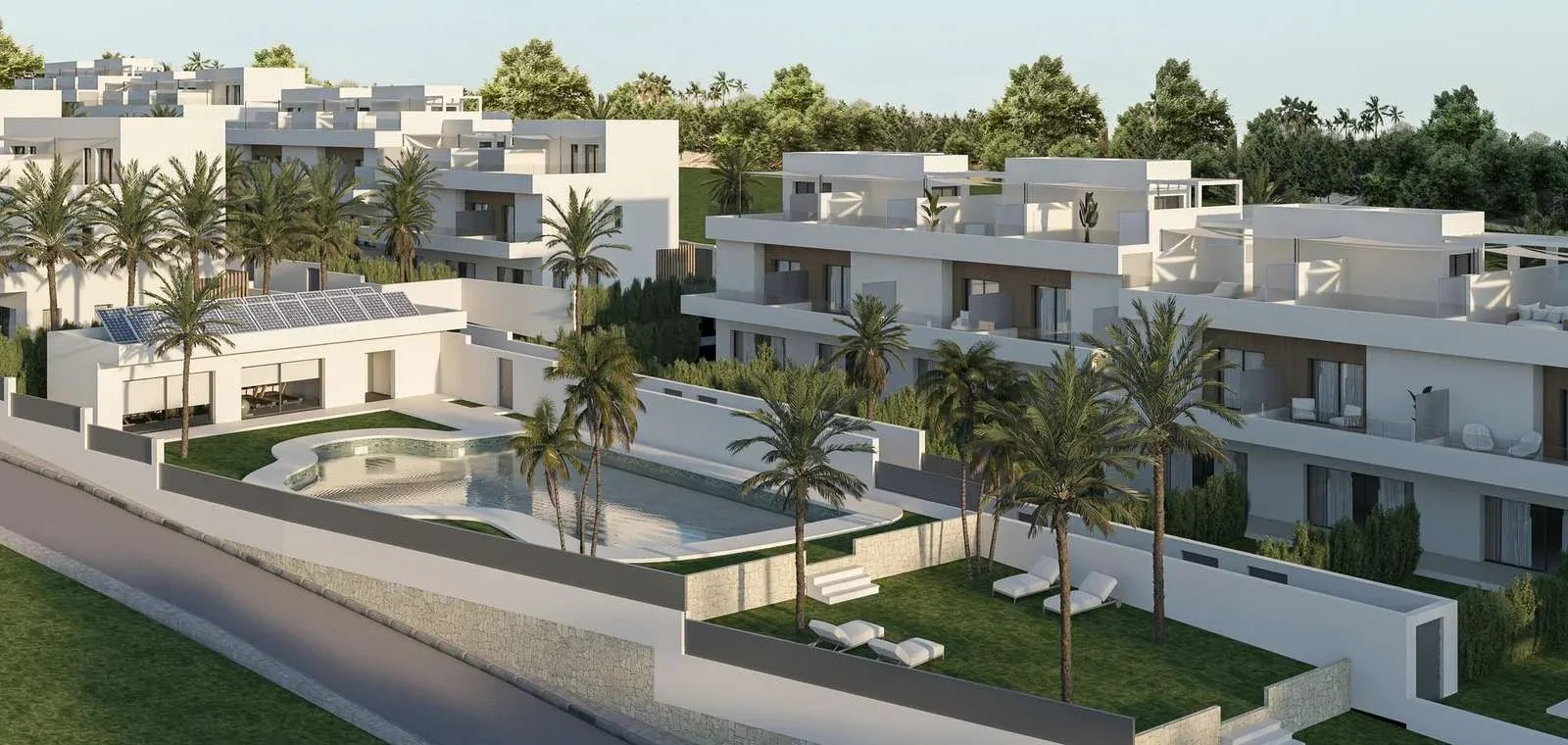
New developments in Estepona




From purchase to income: the timeline of an off-plan investment
An off-plan investment follows a predictable path from reservation to the first rent. This is how it can look:
- Reservation Unit reserved at today's price, documents checked by your lawyer.
- Contract Purchase contract and first stage payment, with your individual guarantee.
- Construction Stage payments as agreed; no imputed income tax on the property yet.
- Completion Handover inspection, deed at the notary, keys and warranties begin.
- First season Furnishing, rental registration or tenancy, and the first income.
Planning the furnishing and the rental set-up during construction means the home can start earning soon after the keys arrive, ideally in time for its first full season of guests or its first long-term tenant. A local management company can prepare everything while you are abroad.
Invest in Spanish property: from first shortlist to completion
Start with your strategy, then the location, then the development. Decide whether you want income, growth, own use or a mix, and set your budget with the buying costs on top. Then compare towns and neighbourhoods with the measured values in this guide, and speak to a tax adviser about your country of residence.
If you decide to invest in Spanish property on the western Costa del Sol, Estepona offers strong measured value growth, a year-round rental market and the widest choice of New Builds between Sotogrande and Marbella. We are happy to prepare a shortlist with the figures for each project's neighbourhood, so your decision rests on numbers, not just on the view.
Frequently asked questions
Is it a good time to invest in Spanish property on the Costa del Sol?
We do not make forecasts, but the measured past is clear. On our own analysis, the public price index for Resales in Estepona rose by 194.1% in ten years and 17.4% in the last year to August 2026, and long-term rents rose by 190.3% in ten years.
What rental yield can I expect on the Costa del Sol?
On our own analysis, the gross rental yield on Resales in August 2026 was 5.05% in Estepona, 4.75% in Marbella, 4.76% in Benahavís, 5.41% in Manilva and 5.47% in Casares. Within Estepona, Costa Natura reached 6.81%.
How are rental profits taxed for non-residents?
Residents of the EU and EEA pay 19% on net rental income after deducting costs. Residents of other countries, including the UK and the US, pay 24% on gross rental income. The return is filed on form 210.
How are capital gains taxed when a non-resident sells?
At 19% under the Non-Resident Income Tax Act. The buyer withholds 3% of the price and pays it to the tax office as a payment on account of the seller's tax.
Should I invest in Spanish property through a New Build or a Resale?
In Estepona the difference is small: New Builds were only 2.9% above the Resale index in September 2026. A New Build brings current standards, legal warranties, protected stage payments and no imputed income tax during construction.
What does it cost to buy property in Andalusia?
When you invest in Spanish property in Andalusia, a New Build carries 10% VAT and 1.2% stamp duty and a Resale 7% transfer tax, plus notary, land registry and legal fees on official scales.
Do I pay tax on a property I do not rent out?
Yes, as a non-resident you pay tax on an imputed income of 1.1% or 2% of the cadastral value each year. For a property under construction, no income is imputed until it is completed.
Which town on the Costa del Sol has grown most in value?
On our own analysis to August 2026, Estepona led the western Costa del Sol over one year and ten years, with 17.4% and 194.1%. Over five years, Benahavís was slightly ahead with 103.6%, against 98.7% in Estepona.
Can I invest in Spanish property as a foreigner?
Yes. Foreigners can invest in Spanish property on the same terms as Spanish buyers, with an NIE number and a Spanish bank account. Spanish banks also lend to non-residents.
Can I rent out my property to holidaymakers?
Yes, once it is registered in the Andalusian tourism register. In an apartment building, the owners' association can decide on holiday rentals by a three-fifths majority, without retroactive effect for registered homes.
Sources & official links
- BOE – Non-Resident Income Tax Act (Royal Legislative Decree 5/2004), Articles 24 and 25 (checked 21.09.2026)
- BOE – Personal Income Tax Act 35/2006, Article 85 (imputed income) (checked 21.09.2026)
- Agencia Tributaria – Non-resident income tax (checked 21.09.2026)
- Junta de Andalucía – General ITPAJD tax rate (checked 21.09.2026)
- Junta de Andalucía – Wealth tax (100% reduction) (checked 22.09.2026)
- BOE – Building Act 38/1999 (LOE), first additional provision and Article 17 (checked 21.09.2026)
- Ayuntamiento de Estepona – 2026 budget (checked 21.09.2026)