
Buying Off-Plan in Spain: How Your Money Is Protected (2026)

Buying a home that does not exist yet asks for a particular kind of trust, and Spanish law is built to make that trust unnecessary. Anyone buying off plan in Spain is covered by one of the strongest buyer-protection regimes in Europe: once the building licence is granted, every euro you pay towards the price must be guaranteed by a bank or an insurer, with the tax on it and interest on top.
The protection is simple to use: you check it before you pay, and you know the one deadline that keeps it active, which this guide explains. I work directly with the developers from Sotogrande to Marbella, and new developments are the core of what we do, so this guide is written from the law itself and from the side of the buyer, with Estepona and its large choice of new developments as the example throughout, from reservation to handover.
What off-plan actually means
Off-plan, sobre plano, means you sign for a home before it is finished, often before the foundations are poured. You choose from plans, a show flat or a scale model, commit to a price, and pay part of it in stages while the building goes up. The balance is paid at the notary once the home is complete and legally fit to live in.
It sits at one end of a spectrum. At the other end is a key-ready new build, finished and waiting, which you buy much like a resale. In between are homes under construction that are months rather than years from completion. The rules below apply whenever you pay a developer money before the home is handed over, which covers everything except key-ready. If you need to move in within months rather than years, key-ready is usually the better fit, and the choice between the two is less about price than about your own timeline.
The attractions are straightforward: you pay today's price for a home delivered later, you usually choose floor, orientation and sometimes finishes, and your money is spread over the build rather than paid at once. The costs are equally clear: you wait, you commit to a building you have only seen on paper, and you carry a small risk that it arrives late.
Why off-plan works so well in Estepona right now
The usual argument against buying new is the premium: a new home costs substantially more than a comparable older one. In Estepona that argument is unusually weak. On our own survey of 18 September 2026, new developments in the municipality were asking €5,145 per square metre across 840 priced units in 118 schemes, against a resale index of €5,000 per square metre for August 2026. That is a premium of 2.9%.
Three percent buys current insulation and glazing, air conditioning designed in, a ten-year structural warranty and, if you buy off-plan, stage payments guaranteed by a bank. The full comparison is in our note on the new build premium in Estepona, and the split by property type, where apartments asked €5,130 per square metre, townhouses €4,927 and villas €5,753, is in our note on prices by property type.
Depth of supply matters too. With well over a hundred schemes in one municipality, a buyer looking at off-plan here is choosing between front line, golf, town centre and hillside at once, and can compare developers against each other rather than taking whatever is being built.

How the payments work
Every developer sets its own schedule, so the percentages vary from project to project, and it is worth reading the one in your contract rather than assuming a standard. The sequence, though, is almost always the same.
- Reservation. A fixed sum takes the property off the market while your lawyer checks the project. It is set by the developer and often credited against the price. Ask specifically whether it is covered: the obligation to guarantee starts when the building licence is granted, so a reservation paid before that is the one payment to check.
- Private purchase contract. Usually within a few weeks. You sign the contrato de compraventa and pay a first instalment. This is the moment the guarantee must be in your hands.
- Stage payments. Further instalments during construction, linked either to dates or to milestones such as structure or roof. Each one goes into the special account.
- Completion. Once the building is finished and certified fit to live in, you sign the public deed at the notary and pay the balance, often with a mortgage.
- Handover. You receive the keys, and the developer's guarantee is cancelled because its job is done.
VAT is charged on each payment as you make it, not in one sum at the end, which matters for cash flow. And because the guarantee covers the tax as well as the price, nothing you pay on account of the price after the building licence is granted is unprotected, provided the guarantee exists and covers the amounts in your contract.
Paying for it: stage payments first, mortgage last
The financing of an off-plan purchase has a shape that catches some buyers out. A Spanish mortgage is secured on a finished, registered property, so it is normally drawn down at completion, on the day you sign the deed, and not before. The reservation and the stage payments during construction therefore come from your own funds.
That has two consequences worth planning for. First, you need the construction-stage money available in cash, in euros, on the dates in your contract, which for buyers earning in pounds or dollars means thinking about currency as well as amount. Second, a mortgage offer obtained today may not still be valid on a completion date eighteen months away, so most buyers secure the mortgage in principle early and the formal offer closer to handover. Our guide to Spanish mortgages for non-residents covers how lenders treat off-plan purchases.
The bank guarantee: what the law actually requires
The rules sit in the first additional provision of the Building Act, Law 38/1999, known as the LOE. They replaced the old Law 57/1968 from 1 January 2016, which is why older guides cite a law that no longer applies. The wording is precise, and the precision is where your protection lives.
What the guarantee must cover
Notice the trigger. The guarantee does not only protect you against a developer going bankrupt. It protects you against a developer who simply does not deliver on time, which is both far more common and far easier to prove.
One policy, in your name
An insurance policy used as a guarantee must be an individual policy for each buyer, naming the specific property. A bank guarantee must cover the full amount of your advance payments. This is not a general bond sitting somewhere in the developer's files; it is a document that refers to you and to your apartment.
The law also says when you get it: at the moment you sign the purchase contract, the developer must hand you the document that proves the guarantee, individualised to the amounts you will pay. If you are asked to sign and pay without it, that is the moment to stop.
The special account
The second protection is less known but just as important. The developer must receive your money through a bank, into a special account kept separate from all its other funds, and may only draw on it for the construction of the homes. The bank opening that account is itself required to demand the guarantee first.
In practice, this gives you a simple test. The account number you pay into should be the one named in the contract as the special account, and it should not be a general account of the developer. Your lawyer checks this; you can check it too.
Buying off plan in Spain: the checks before you pay
Everything above turns into a short list of documents to see before any money moves. None of them is unusual to ask for, and a reputable developer produces them without hesitation.
- The building licence, granted, not applied for, since the guarantee obligation starts from it
- The guarantee document, individual to you, naming the property and covering the amounts in the contract
- The name of the bank or insurer in the contract itself, as the law requires
- The special account named in the contract, and that it is the account you are paying into
- A contract clause obliging the developer to return all payments with taxes and interest if the home is not delivered on time
- An agreed completion date, stated clearly, since the guarantee is measured against it
- The specifications and plans annexed to the contract, so changes can be measured
- The developer's land title, checked at the Land Registry
The single most important person when buying off plan in Spain is not on this list: your own lawyer. Use an independent one who acts only for you and has no connection to the developer or to the agent. Checking these documents is the core of what you are paying them for, and it is the best money you will spend on the whole purchase. Our complete guide to buying property in Spain sets out how the lawyer's role fits the rest of the process.
How the law protects you at every stage of buying off plan in Spain
Since 2016 the guarantee rules give buyers who check the documents strong protection. The rules were tightened after the years following 2008, and today they cover every payment you make before completion. Knowing what they cover makes clear what you are checking for.
Your claim is against the bank or insurer
This is what the guarantee is designed for. If a developer were ever unable to deliver, your claim is against the bank or insurer, not against the insolvent company, and the guarantor's obligation does not depend on the developer's finances. That is why the document check comes before the first payment: with the individual guarantee in hand, your money is secured.
The specifications change
Plans evolve during construction. A developer may substitute one brand of tiles for another, move a window, or change a kitchen supplier. Minor changes of equivalent quality are normal and usually permitted by the contract. Material changes to area, layout, orientation or quality are a different matter. The protection here is contractual rather than statutory, which is why the specifications and plans should be annexed to your contract, not merely shown in a brochure. What is annexed can be measured; what was in a brochure can be argued about.
Extras and costs: agree them in the contract
A few items may sit outside the headline price. Parking spaces and storage rooms are sometimes sold separately. Upgrades chosen during construction carry their own VAT. Connection charges for water and electricity may fall on the buyer. And the community fee for the finished development is often an estimate until the building is running. All of it is easy to ask about before you sign, and every agreed extra should appear in writing.
Selling before completion
Some buyers plan to sell their contract before the building is finished. That depends entirely on the developer, since transferring your position to a new buyer generally needs its consent and may carry a fee. If this is part of your plan, it belongs in the contract negotiation, not in a conversation eighteen months later. For most buyers, off-plan is a way to buy a home, not a trading position, and it works best when treated that way.
If completion moves: you choose between extension and full refund
If the completion date moves, the law gives you a clear choice. Planning, supply chains and weather can move completion dates, and a few months' slippage on a large development is normal. What matters is that the law gives you a clear choice when the agreed date passes, and that you make it deliberately.
Under the Building Act, if construction has not started or the home has not been delivered in time, the buyer may choose between two options. The first is to terminate the contract and recover everything paid, with the taxes on it and legal interest. The second is to grant the developer an extension, which must be recorded in an additional clause to the contract, stating the new completion date.
The second option is often the sensible one. If the building is visibly nearly finished and the developer is sound, a few more months may be far better than unwinding the purchase. But note the form: an extension is written into the contract, with a new date, not agreed over the phone or implied by waiting. That formality is what keeps your guarantee aligned with the new timetable.
The two-year rule: how to keep your guarantee active
When buying off plan in Spain, a written decision keeps you protected. If a building is going up and the developer is sound, a written extension with a new date is usually the natural choice, and it aligns your guarantee with the new timetable in one simple document.
The practical consequence is that every late completion needs a decision within a known window. Either you formally extend, in writing, with a new date, or you formally demand termination and repayment. Your lawyer handles either step in a few days, and you stay fully protected throughout the process.
How to claim on the guarantee, step by step
If you decide to terminate, the law sets out the sequence. It is short, and each step has a clock.
- Day 0 Formal demand to the developer. You demand the return of everything paid, with taxes and interest, in a way that can be proved later. In Spain that usually means a burofax sent by your lawyer.
- Day 30 The developer's time is up. If it has not repaid within thirty days, you may claim directly from the bank or insurer. If a demand to the developer is impossible, for example because it has disappeared, you may go straight to the guarantor.
- Claim Submit to the guarantor the contract, the guarantee and proof of every payment. Amounts you cannot prove you paid are not covered, so keep every transfer receipt.
- Within 30 days Payment. Where the guarantee is an insurance policy, the law requires the insurer to pay within thirty days of your claim.
Two details matter. The insurer cannot refuse to pay you because the developer failed to pay the premium; the law rules that defence out. And only amounts you can prove you paid are recoverable, so the bank statements showing each transfer into the special account are, in the end, the most valuable documents you hold.
Completion in Andalusia: the declaración responsable
Completion is not simply the day the builders leave. The home must be certified fit to live in before you can be asked to pay the balance, and the Building Act refers to that certificate as the habitation certificate, the first occupation licence, or an equivalent document.
In Andalusia the equivalent has changed. Under Article 138 of the Andalusian Land Sustainability Act, Law 7/2021, known as LISTA, the occupation of new buildings that already have a building licence is now handled through a declaración responsable de ocupación, a responsible declaration, rather than a separate licence procedure. Many guides still speak only of the licencia de primera ocupación, which is why buyers are sometimes confused when their lawyer asks for a different document.
The principle is unchanged: before you sign the deed and pay the balance, your lawyer confirms that the document certifying the home can be occupied exists. Once that document is issued and the home is handed over, the developer's guarantee is cancelled. The same effect follows if the buyer refuses to accept a home that meets those conditions.
After completion: the 1, 3 and 10-year warranties
The guarantee protects your money until you have your home. Once you have it, a second layer of protection takes over, set out in Article 17 of the Building Act.
| Period | What it covers | Who answers |
|---|---|---|
| 1 year | Finishing defects: surfaces, fittings, workmanship | The builder |
| 3 years | Defects in components or installations affecting habitability | Those involved in the building process |
| 10 years | Structural defects: foundations, columns, beams, slabs, load-bearing walls | Those involved in the building process |
The detail that surprises owners is when the clock starts. The periods run from the recepción de la obra, the formal acceptance of the finished works by the developer from the builder, not from the day you bought or moved in. On a large development handed over in phases, your apartment's warranty may have started a few months before your keys did.
The one-year period is the one to act on. Inspect the home carefully at handover and in the weeks after, list every defect in writing, and send the list to the developer well inside the first year. Small things, a door that does not close cleanly, a patch of uneven grout, a tap that drips, are the builder's responsibility for a year and yours after that.

The handover inspection
Handover is the one moment when you have the most leverage and the least time, so it is worth arriving prepared. Walk the property slowly, room by room, in daylight. Open and close every door, window and shutter. Run every tap, flush every toilet, switch on every light and the air conditioning in every room. Check that the tiles sound solid and that the grout is even, that the terrace drains towards its outlet, and that sockets and switches sit straight.
Write everything down with a photograph and a location, however small. A list that says "bedroom two, left of window, crack in plaster, 10 cm" is useful; a list that says "some cracks" is not. Send it to the developer in writing, keep a copy, and ask for a date by which the repairs will be done. Reputable developers expect this list and have after-sales teams to deal with it.
If you cannot be present, a local surveyor or your lawyer can inspect for you. What matters is that the list exists, is dated, and reaches the developer inside the one-year window for finishing defects. After that, the same small faults become your cost rather than theirs.
The taxes on an off-plan purchase
Buying new in Andalusia carries a different tax from buying a resale. A new home is sold with 10% VAT, paid in step with each payment you make, plus 1.2% stamp duty, the AJD, when the deed is signed. A resale carries 7% transfer tax instead. On acquisition taxes alone, then, buying new costs roughly four percentage points more, and it is worth knowing that many guides quote the Valencian rates, which are higher, as if they applied everywhere.
Against that, two things run in your favour while you wait. First, Spanish income tax law imputes no income for properties under construction, so a non-resident owes no imputed income tax until the home is finished. Second, IBI, the municipal property tax, only begins once the finished home is registered with its own cadastral value. Our guide to non-resident property tax in Spain covers both, and how they change the year you complete.
You will also need an NIE number before you can sign the deed at completion, and it is worth applying for one as soon as you reserve. Our guide to the NIE number in Spain sets out how.
Choosing the development, not just the apartment
Once the legal protections are in place, the question that remains is the one no guarantee can answer: whether this is the right building. A guarantee returns your money if the home is not delivered. It does nothing if the home is delivered and turns out to be in the wrong place, or in a community whose fees you did not expect.
Ask about the community budget the developer projects for the finished scheme, because resort-style facilities cost money every month for as long as you own. Ask how many phases there are and which one you are buying into, because living on a building site for a second phase is a real cost. Visit the location at a quiet time of year, not only in August. And ask what the developer has built before on this coast, and go and look at it.
That last question is where local knowledge earns its keep. I work with all the developers from Sotogrande to Marbella and speak to them directly, so I can tell you how each scheme is progressing. The current developments in Estepona and the full list across the coast are the place to start comparing.
New developments in Estepona

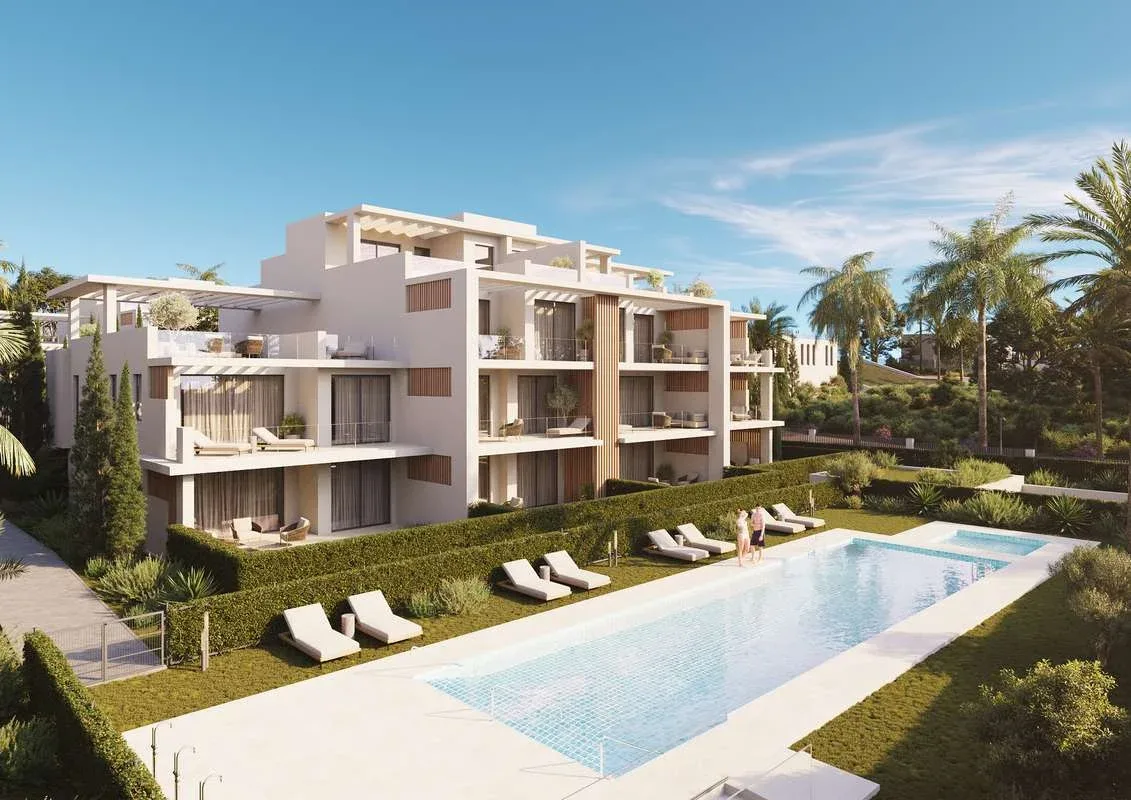
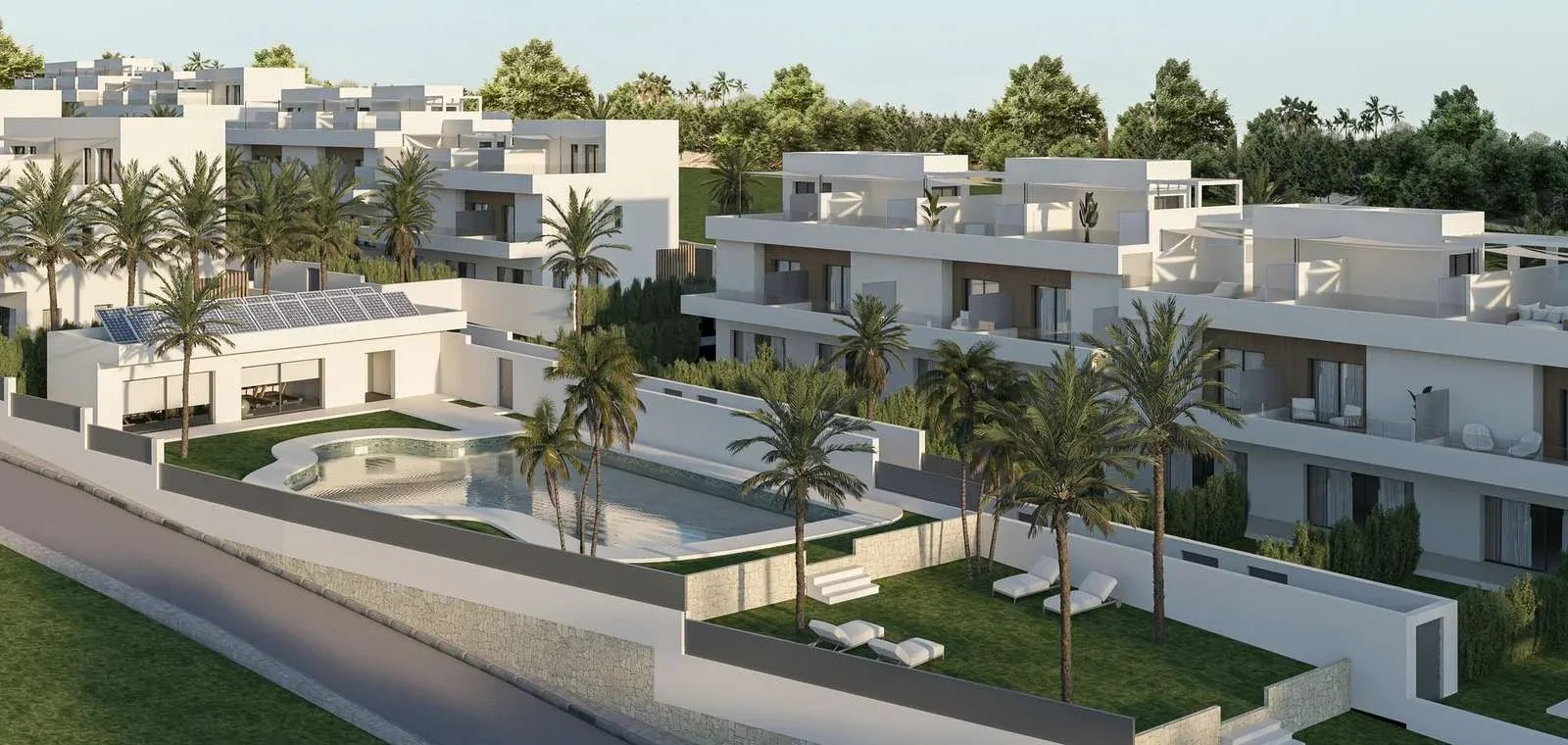



Buying off plan in Spain with confidence, step by step
Location first, documents second, and the guarantee before the first payment. If you are still looking: shortlist developments by location first and by apartment second, and ask each developer at the outset for the building licence status and who issues their guarantees. If you have reserved: instruct an independent lawyer, apply for your NIE, and do not sign the private contract until the individual guarantee document is in your hands.
If your completion date moves: decide in writing whether you extend or terminate, well inside the two-year window. And when the keys arrive, inspect carefully and send your list of defects before the first year ends. Buying off plan in Spain rewards buyers who read the rules once and follow them, and the rules, for once, are on your side.
Frequently asked questions
Is buying off plan in Spain safe?
Yes, buying off plan in Spain is well protected by law. Since 2016 the Building Act requires every developer who takes money before completion to guarantee its return, with taxes and legal interest, through a bank guarantee or an insurance policy. The protection is real, but you have to check that it exists and act on it in time.
What does the bank guarantee cover on an off-plan purchase?
Every amount paid on account of the price once the building licence is granted, including the VAT on it, plus the legal rate of interest from the date of each payment. It is triggered if construction does not start, or is not completed within the agreed period.
How long does the bank guarantee protect me?
Until completion and handover. When buying off plan in Spain and a project runs late, you keep the guarantee active by deciding within two years: either you agree a written extension or you demand termination and the return of your money.
How do I claim on an off-plan bank guarantee?
You first demand repayment from the developer in a way that can be proved, such as a burofax. If the developer has not repaid within thirty days, you claim directly from the bank or insurer. An insurer must then pay within thirty days.
What are my options if an off-plan development in Spain is delayed?
You choose. You can terminate the contract and recover everything paid, with taxes and interest, or you can grant the developer an extension, which must be recorded in an additional clause to the contract with a new completion date.
What warranties come with a new build in Spain?
Ten years for structural defects, three years for defects that affect habitability, and one year for finishing defects. The periods run from the formal handover of the works by the builder, not from the date you bought.
What taxes do you pay when buying off plan in Andalusia?
10% VAT on the price, paid in step with each stage payment, plus 1.2% stamp duty when the deed is signed. A resale in Andalusia carries 7% transfer tax instead.
Do I pay property tax on a home that is still being built?
Not the non-resident imputed income tax: Spanish law imputes no income for properties under construction. IBI begins once the finished property is registered and assigned its own cadastral value.
Should I use the developer's lawyer?
No. Use an independent lawyer who acts only for you. Their core job on an off-plan purchase is to confirm the guarantee, the building licence and the special account before a single stage payment leaves your account.
What is the declaración responsable de ocupación?
In Andalusia it is the document that, for new buildings with a building licence, now takes the place of the traditional first occupation licence. It certifies the building can be lived in, and together with handover it is what ends the developer's guarantee.
Sources & official links
- BOE – Building Act 38/1999 (LOE), first additional provision and Article 17 (checked 21.09.2026)
- BOE – Andalusian Land Sustainability Act 7/2021 (LISTA), Article 138 (checked 21.09.2026)
- BOE – Personal Income Tax Act 35/2006, Article 85 (checked 21.09.2026)
- Agencia Tributaria – Non-resident income tax on Spanish property (checked 20.09.2026)


