Living in Marbella: Life on the Golden Coast, and the Smart Choice Next Door
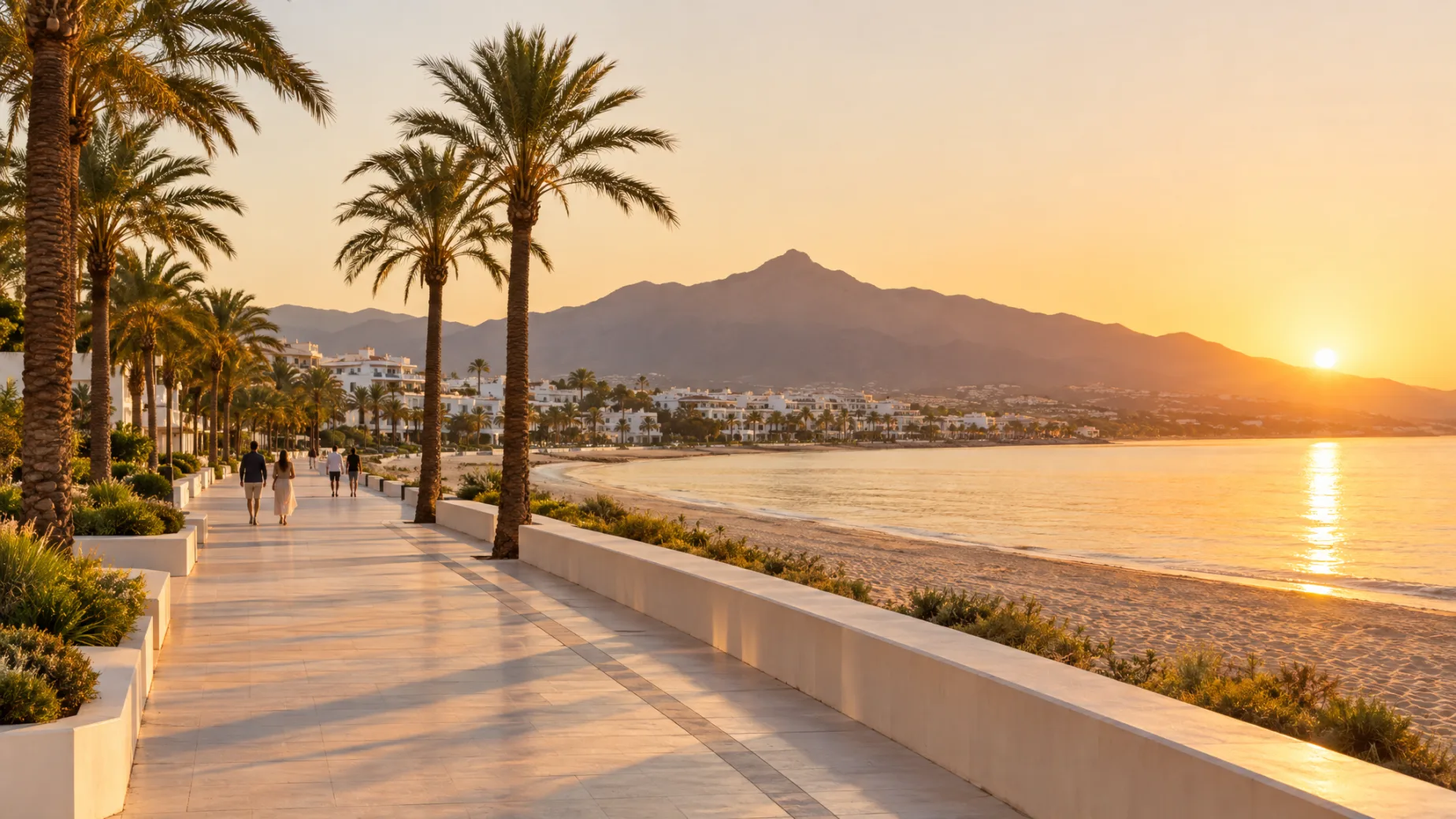
Morning coffee in the Plaza de los Naranjos, lunch by the sea, an afternoon on the golf course and dinner under the stars at Puerto Banús. Living in Marbella is one of the great dreams of the Costa del Sol, and it is easy to see why: sunshine all year, beautiful beaches, a lively international scene and the charm of an Andalusian old town at its heart.
We moved to Estepona from Germany ourselves, half an hour west of Marbella, and since 2019 we have worked with all the developers from Sotogrande to Marbella. I look after every buyer personally, and I know both towns well. This guide shows what living in Marbella offers, what homes cost on our own figures, how schools, healthcare and residency work, and why Estepona, on the same coast, has become such a smart choice for people who want the Marbella lifestyle with more space for their budget.
Living in Marbella: what makes it so special
Marbella combines glamour and Andalusian charm like nowhere else on the coast. It is the name that made the Costa del Sol famous, and it still offers one of the most complete lifestyles in southern Europe.
The old town is the heart of it all: narrow whitewashed streets decorated with flowers, little squares with orange trees, tapas bars and boutiques, and the Plaza de los Naranjos at its centre. A few minutes away, the seafront promenade runs along the beaches, and to the west the Golden Mile leads to Puerto Banús, with its marina, its yachts, its designer shops and its restaurants.
Behind the coast, Nueva Andalucía is known as the golf valley, with several courses within a few minutes of each other. The Sierra Blanca mountain rises above the town and gives Marbella its sheltered climate and its green backdrop. And along the coast, beach clubs, restaurants and hotels have made Marbella a place where something is always happening.
Living in Marbella also means an international community from all over Europe and beyond, alongside a warm Spanish one. English is widely spoken, services are geared to people from abroad, and there are clubs, schools and activities for every interest. It is a rare combination of sunshine, sophistication and ease.
A year on the western Costa del Sol: the seasons
The climate is the first luxury of living in Marbella or Estepona: mild, bright winters and long, warm summers by the sea. The official figures of the Spanish weather service for Málaga airport show why life here moves outdoors.
Winter is the season that surprises newcomers most: lunch outside in the sun, golf on green courses, long walks on the promenade in a light jacket. Spring brings orange blossom to the old towns and the first warm days in March. Summer belongs to the sea, the beach clubs and the late evenings, and autumn, with warm water and quieter beaches, is for many the most beautiful time of all.
The rhythm of the year shapes daily life. The busiest weeks are in July and August, when visitors come from all over Europe, while the rest of the year is calmer and more local. Living here year-round means enjoying both: the energy of the summer and the peace of the winter months, when the coast belongs to its residents.
Marbella's neighbourhoods at a glance
Marbella is a large municipality with very different neighbourhoods, and each suits a different way of life. These are the best-known:
- The old town: Andalusian charm, cafés, restaurants and the Plaza de los Naranjos, a short walk from the beach.
- The Golden Mile: between the town and Puerto Banús, with some of the most exclusive addresses on the coast.
- Puerto Banús: the marina, with shopping, nightlife and restaurants, lively all year.
- Nueva Andalucía: the golf valley, with villas, apartments and views of the mountains and the sea.
- San Pedro de Alcántara: a relaxed town within the municipality, with a boulevard, a beach promenade and a family-friendly feel.
Our own market area covers the west of the municipality, from the Golden Mile and Nueva Andalucía to San Pedro de Alcántara, together with Estepona and the towns further west. The new developments in Marbella show the current projects there.
Which neighbourhood suits you depends on how you want to live: close to the beach, in the middle of the action, near the golf course, or in a quieter town setting. The best way to find out is to spend a few days in each, and I am happy to show you around on both sides of the border between Marbella and Estepona.
What living in Marbella costs: homes and rents
Homes are the biggest part of the budget on the Costa del Sol, and Marbella sits at the top end of the western coast. Our own figures show how it compares with Estepona, half an hour away:
| Figure | Marbella | Estepona |
|---|---|---|
| Long-term rent per m² a month | €23.7 | €21 |
| New Build median per m² | €7,491 | €5,145 |
| Resale index per m² | €5,992 | €5,000 |
| New Build floor area for €500,000 | about 67 m² | about 97 m² |
For a long-term rental, the difference is about 13%: an 80 m² apartment rents for around €1,900 a month in Marbella and around €1,680 in Estepona on these averages. For a New Build purchase, the gap is larger: New Builds in Estepona cost around 31% less per square metre than in our Marbella market area, and for the same €500,000 you get a whole extra bedroom or a much larger terrace.
Part of Marbella's higher average comes from its prime locations and its many individual villas. Buyers who love Marbella can find very good value in its quieter areas, and buyers who want the most space for their budget find it just across the border in Estepona. Our guide to the cost of living on the Costa del Sol sets out the rest of the monthly budget line by line.

Estepona: the same coast, half an hour west
Estepona gives you the lifestyle of the western Costa del Sol with more space for your budget and a real Spanish town around you. It is a very good reason to look a little further along the coast.
Estepona has almost 80,000 residents, a restored old town full of flowers, 21 kilometres of coastline and a long seafront promenade, and it lives all year. According to the town hall, it has repaid its inherited debt, has funded its own hospital, has almost completed a coastal path of more than 21 kilometres for walking and cycling, and is investing around €27 million in its 2026 budget, while property tax for registered households is falling.
Values have grown strongly. On our own analysis, the Resale index for Estepona rose by 194.1% in ten years to August 2026 and by 17.4% in the last year; in Marbella the figures were 151.3% and 4.0%. With 840 priced New Build units in 118 projects on 18 September 2026, Estepona also has more than three times as much choice as any other town on the western coast.
And Marbella stays close. From Estepona, Puerto Banús, the Golden Mile and Marbella's old town are a short drive away for dinner, shopping or an evening out, and you come home to a town where the neighbours greet you by name. The new developments in Estepona show what is available today.
Marbella or Estepona: which fits your life
Both towns are wonderful places to live, and the choice comes down to the rhythm you want. A few questions make it clear.
If you want to be in the middle of the action, with beach clubs, nightlife, designer shopping and a busy social calendar, living in Marbella puts it all on your doorstep. If you want a calmer, more traditional Spanish town with a lively old town, a harbour and quieter beaches, Estepona is the natural choice, with Marbella close enough to enjoy whenever you like.
Budget plays its part too. For the same budget, Estepona offers more space, more choice of New Builds and, on our figures, a slightly higher rental yield: 5.05% on Resales in August 2026, against 4.75% in Marbella. For families, that can mean an extra bedroom; for retirees, a larger terrace; for investors, a stronger return.
One good answer lies on the border between the two: developments in the east of Estepona, around Benamara–Atalaya and the New Golden Mile, are only minutes from San Pedro de Alcántara and Puerto Banús, and combine Estepona's prices with Marbella's proximity. Selwo and Punta Plata, on the stretch of coast known as the New Golden Mile, offer beaches, green surroundings and new developments close to the border, while the centre of Estepona gives you an old town and a harbour on your doorstep. Whichever you choose, the whole western coast is within a short drive, and your home can be where your budget and your way of life meet best.
Food, markets and the Andalusian way of life
Life on the Costa del Sol is built around the table, and the markets and restaurants of Marbella and Estepona make every day a small celebration. Good food here is part of ordinary life, not a special occasion.
The day starts with a coffee and a toasted roll with tomato and olive oil at the bar on the corner. The markets offer fish from the morning's catch, fruit and vegetables of the season, olives, cheese and ham from the mountains. Lunch is the main meal, often a set menu of several courses, and in the evening friends meet for tapas on a square or dinner by the sea.
Marbella adds a wide range of international restaurants, from beach clubs to fine dining, and Puerto Banús is famous for its evenings by the marina. Estepona's harbour has fish restaurants where the boats come in, and its old town is full of tapas bars around the flower-filled squares. Between the two, you can eat Andalusian one night and Japanese, Italian or Lebanese the next.
The Mediterranean diet of fish, vegetables, olive oil and legumes is one of the healthiest in the world, and on the Costa del Sol it comes naturally: what you buy at the market in the morning is what you cook in the evening.
Sport and the outdoors: golf, beaches and mountains
The western Costa del Sol is one of Europe's great outdoor playgrounds, with golf, sea and mountains within a few minutes of home. The weather makes almost every day a day to be outside.
Golf is part of the landscape: Nueva Andalucía is known as the golf valley, and there are courses all along the coast between Marbella, Estepona and Sotogrande, playable all year. Padel, the Spanish favourite, is played in clubs in every town, and tennis, sailing, paddle-boarding and diving fill the rest of the calendar.
Behind the coast, the mountains invite hiking and cycling: the Sierra Blanca above Marbella and the Sierra Bermeja above Estepona offer trails with views over the sea, and on clear days to the mountains of Africa. In Estepona, a coastal path of more than 21 kilometres links the neighbourhoods along the sea for walking and cycling.
For families, the outdoor life is one of the greatest gifts of the move: children spend their afternoons at the beach, on the sports field or in the pool, and their weekends in the hills or on the water.
Schools for families on the western Costa del Sol
Families on the western Costa del Sol have a wide choice of schools, from Spanish state schools to international schools in English and other languages. The choice of school often shapes the choice of neighbourhood.
Spanish state schools are free for residents, and children who start young pick up the language quickly, becoming bilingual in a way that stays with them for life. Alongside them, the Costa del Sol has international schools teaching the British, American or International Baccalaureate curricula, and the German School in Ojén, just above Marbella, is a recognised German school abroad.
The international schools of the western coast are within easy reach of both towns. Visit a few schools before you decide on a home, because the daily school run is one of the things that shapes family life most. Ask the schools you like about open days or trial days for new pupils, and visit during term time: it gives you the clearest picture of daily life there, from the morning drop-off to the afternoon activities and the friends your children will make.
Healthcare when living in Marbella or Estepona
The western Costa del Sol has excellent healthcare, public and private, with English-speaking doctors and modern clinics. Setting it up is one of the first steps after arrival.
If you work in Spain, you are covered by the public health system through social security. UK State Pension recipients can use an S1 form, registered with the Spanish social security office, and residents in Andalusia without other cover can join the public system through the convenio especial after a year on the padrón, at €60 a month under 65 and €157 from 65. Residence visas such as the non-lucrative visa require private health insurance with an insurer authorised in Spain.
Marbella has large public and private hospitals, and according to the town hall Estepona has funded its own hospital. Our guide to expat health insurance in Spain explains every route in detail.
Visas and residency for Marbella
A life on the Costa del Sol starts with the right residence route. For EU citizens it is a simple registration; for others, a visa that fits their life.
EU citizens can move freely and register as residents after three months, showing work or sufficient means and health cover. Non-EU citizens need a residence route: the non-lucrative visa for people living on their own means, at €2,400 a month in 2026, or the digital nomad visa for remote workers, at around €2,849 a month. People who move to work can also look at the Beckham tax regime, with a flat 24% on employment income up to €600,000.
Our guides to Spanish residency and on how to move to Spain cover the first steps after arrival, from the padrón to the residence card.
Working from Marbella or Estepona
The western Costa del Sol is a very good place to work as well as to live, especially for remote workers and entrepreneurs. The time zone, the connections and the lifestyle all help.
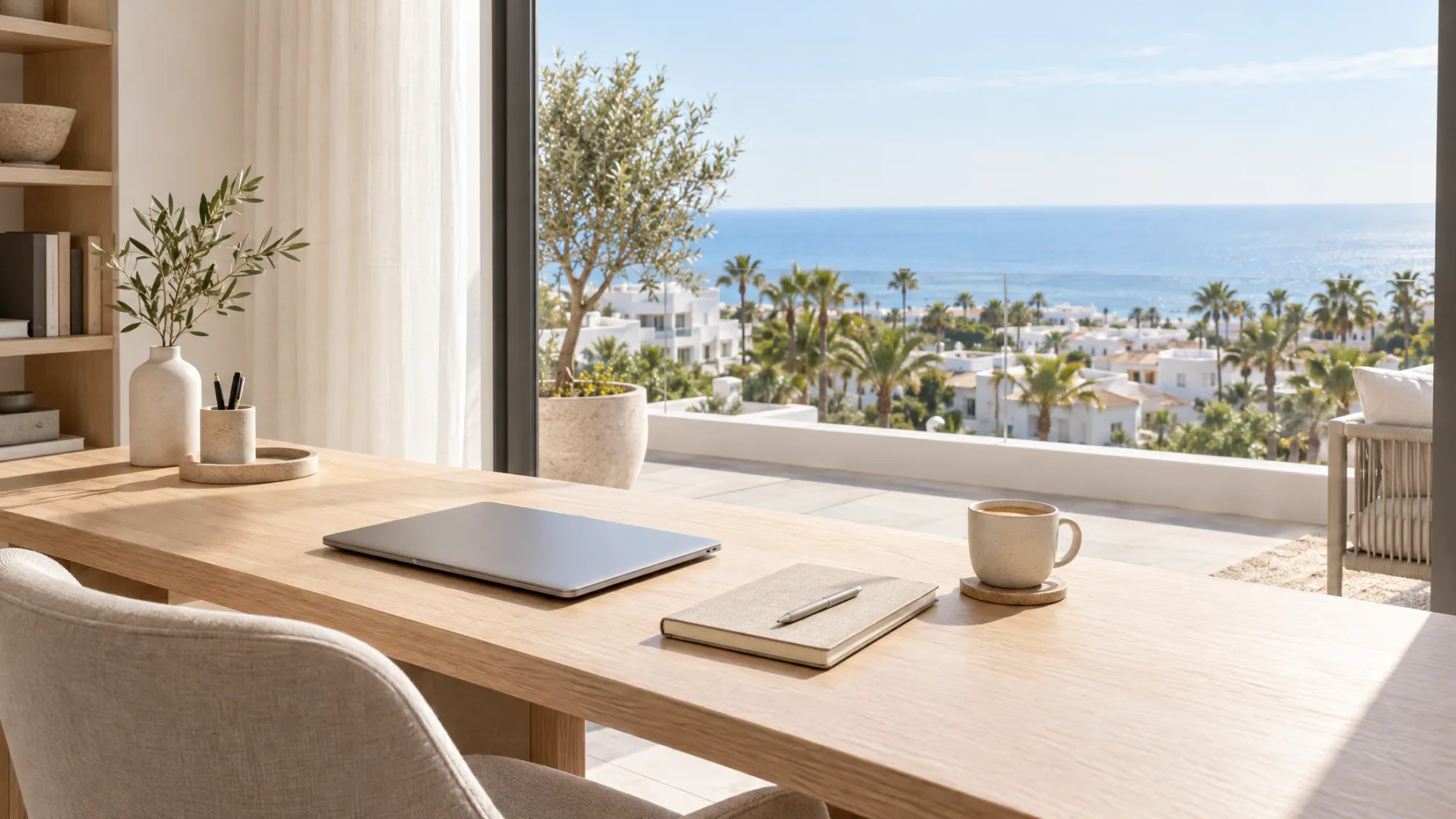
Spain shares its time zone with most of continental Europe, so working hours with colleagues and clients in Germany, France or the Netherlands stay exactly as they were. Málaga airport makes trips to head offices and clients easy, and a home office with a sea view changes how a working day feels.
EU citizens can work here freely, as employees, self-employed or remotely for an employer abroad. Non-EU remote workers can use the digital nomad visa, and people who move to Spain for work can opt for the Beckham regime, with a flat 24% on employment income up to €600,000 for six tax years. Self-employed residents register as autónomos, with a local gestoría handling the paperwork.
Marbella has a large business community and many international companies, and Estepona is close enough to join it for meetings, while offering more space for a home office at a lower price. For someone who works from home most of the week, that extra room can make all the difference.
Community and making friends
One of the great pleasures of living on the western Costa del Sol is how easy it is to build a new circle of friends. The international community is large and welcoming, and the Spanish community warm and open.
Clubs and groups exist for every interest: golf and padel clubs, walking and cycling groups, choirs, book clubs, volunteering, language exchanges. Schools bring parents together, and the beach, the café and the market bring neighbours together. Learning some Spanish, even a little, opens doors everywhere.
Marbella's social life is famous, with events, charity galas and a busy calendar in every season. Estepona's is more local and relaxed, built around the old town, the harbour and the festivals of the year. From either town, the other is close enough to join in, so you can enjoy the best of both.
Getting around: airport, coast and weekends away
The western Costa del Sol is easy to live on and easy to leave for a weekend. Málaga airport, the coastal motorway and the roads into the mountains put everything within reach.
Málaga airport connects the coast with cities across Europe, and Gibraltar airport is 45 kilometres from Estepona. Along the coast, the motorway links Málaga, Marbella, Estepona and Sotogrande, and buses run between the towns. In the centre of Marbella or Estepona you can manage much of daily life on foot; in the developments on the hillsides a car is practical.
Weekends invite exploration: Ronda on its gorge in the mountains, the white villages of Casares and Gaucín, the beaches of the Atlantic coast near Tarifa, and for longer trips Seville, Granada and Córdoba. Living in Marbella or Estepona means the whole of Andalusia is on your doorstep.
Renting first or buying: timing your move
You can arrive in a rental and buy when you are ready, or buy a New Build off-plan and let the construction run in parallel with your move. Both are good ways to start.
A rental is the quickest way to arrive, and it is often the first address you register on the padrón. On our averages, an 80 m² apartment rents for around €1,900 a month in Marbella and around €1,680 in Estepona. A few months of renting lets you get to know the neighbourhoods before you decide where to buy.
Buying off-plan fits a move particularly well: you reserve the home you want, pay in stages during construction, and move into a brand-new home when the keys arrive, built to current standards and with the floor and view you chose. In Estepona, New Builds were only 2.9% above the Resale index in September 2026, so buying new costs little more than buying second-hand.

Buying a home: what to look for on the western coast
A New Build on the western Costa del Sol gives you modern design, a finished community and legal warranties, with nothing to renovate. These points help you compare homes in Marbella and Estepona:
- Location: beach, old town or golf, and the drive to the places you visit most
- Orientation and view: south or west for afternoon sun, and a view that stays open
- Price per square metre: compare like with like, New Build with New Build
- Community: pools, gardens, gym, and the estimated community fees
- Construction stage: off-plan, under construction or ready to move in
- Guarantee: a bank guarantee or insurance in your name for every stage payment
- Use: own use, family visits or rental, and what the community rules allow
Payments during construction are protected by a bank guarantee or insurance in your name once the building licence is granted, and after handover the law provides warranties of ten years for the structure, three for habitability and one for finishing. Our guide to new developments on the Costa del Sol compares the towns, and our complete guide to buying property in Spain explains every step.
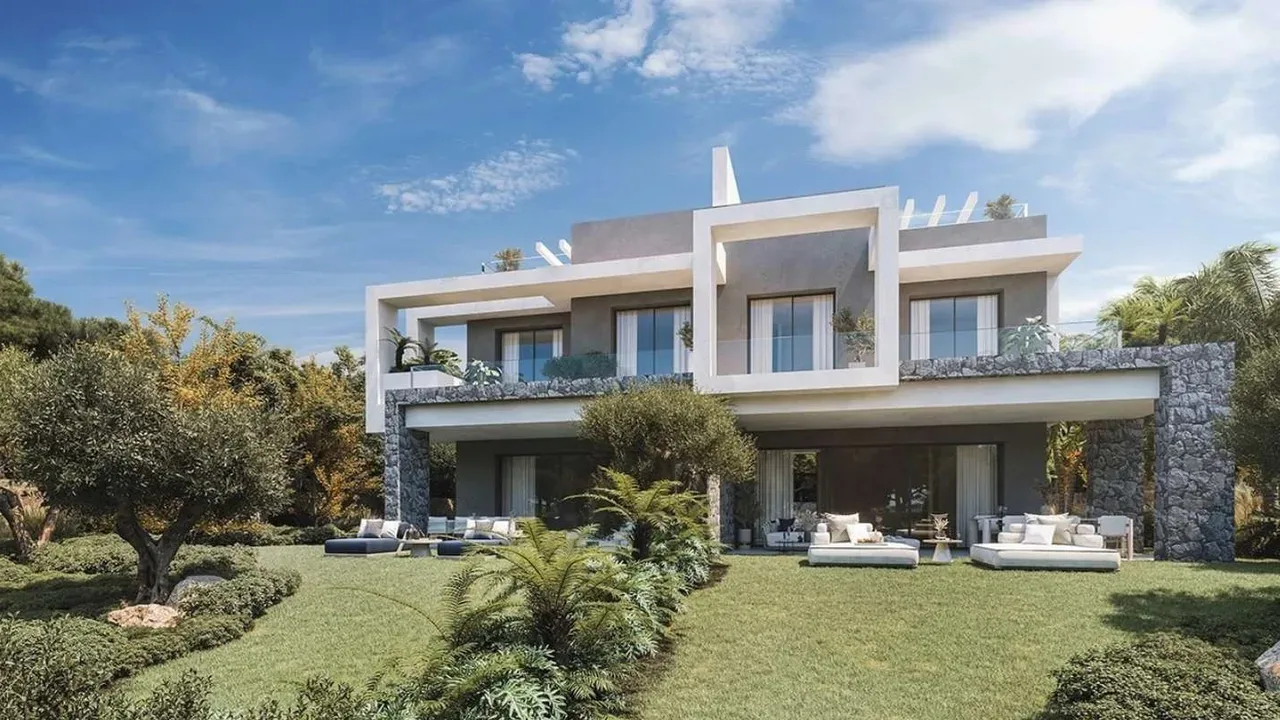
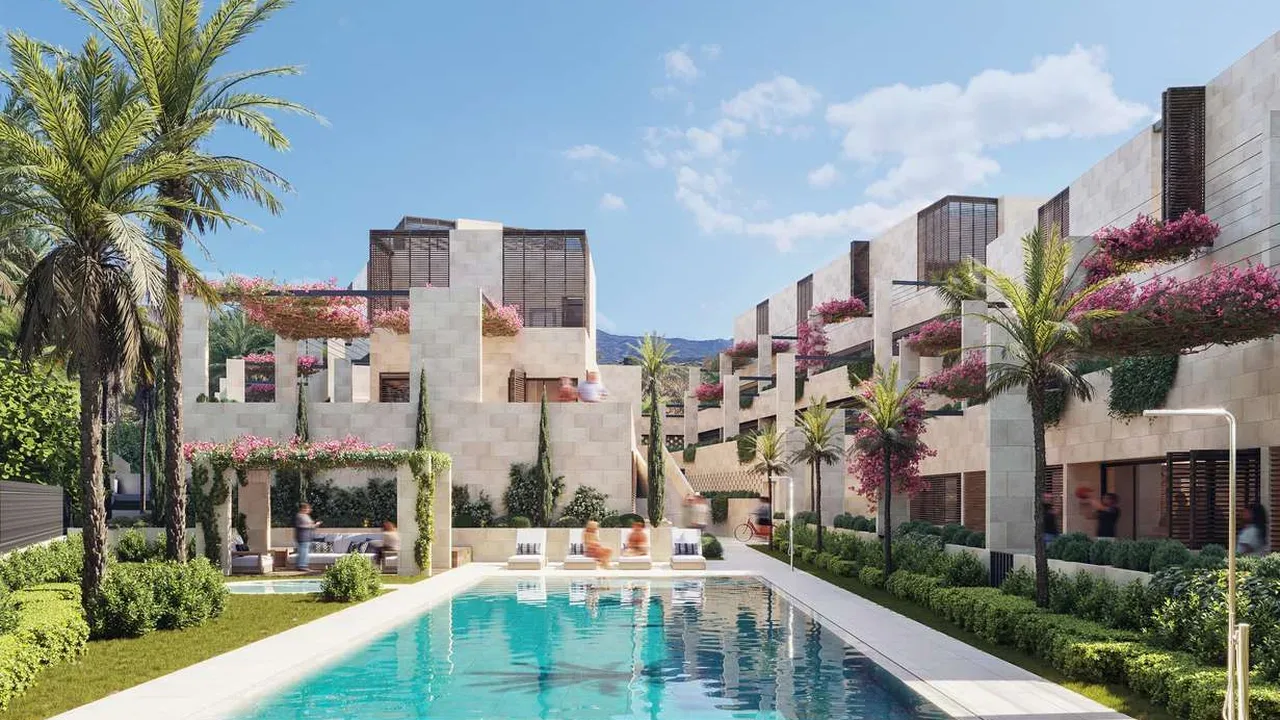
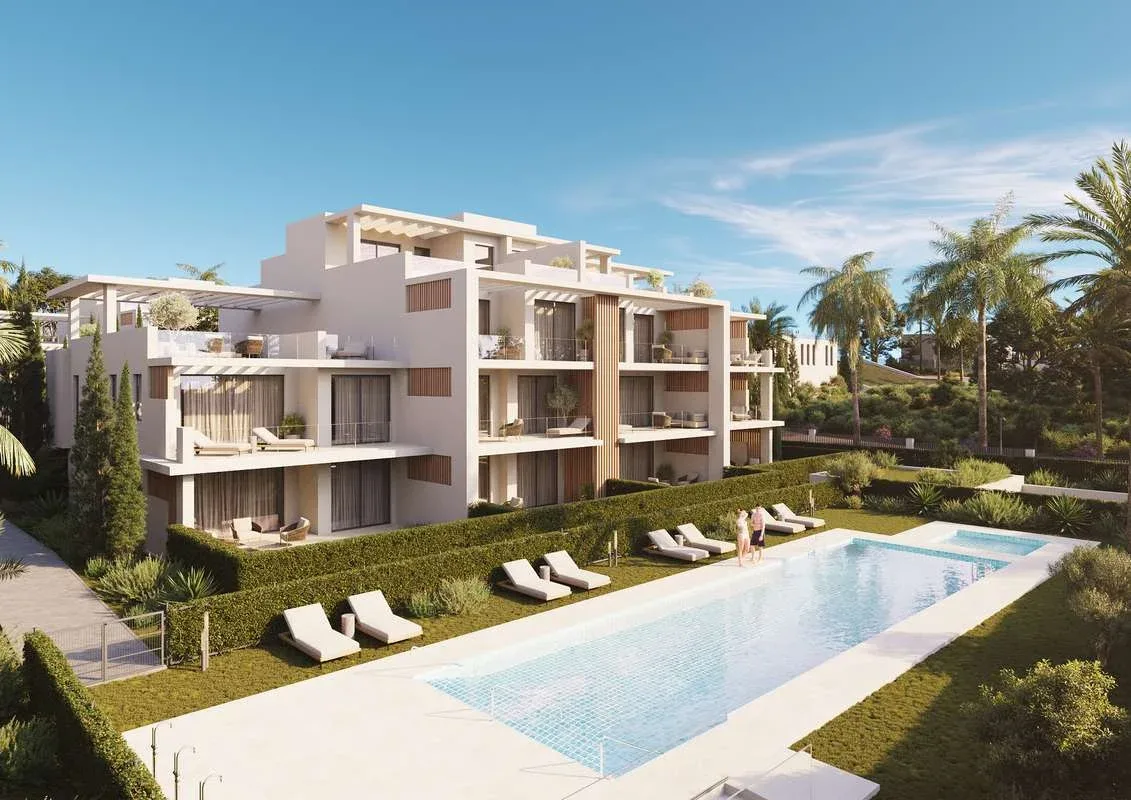
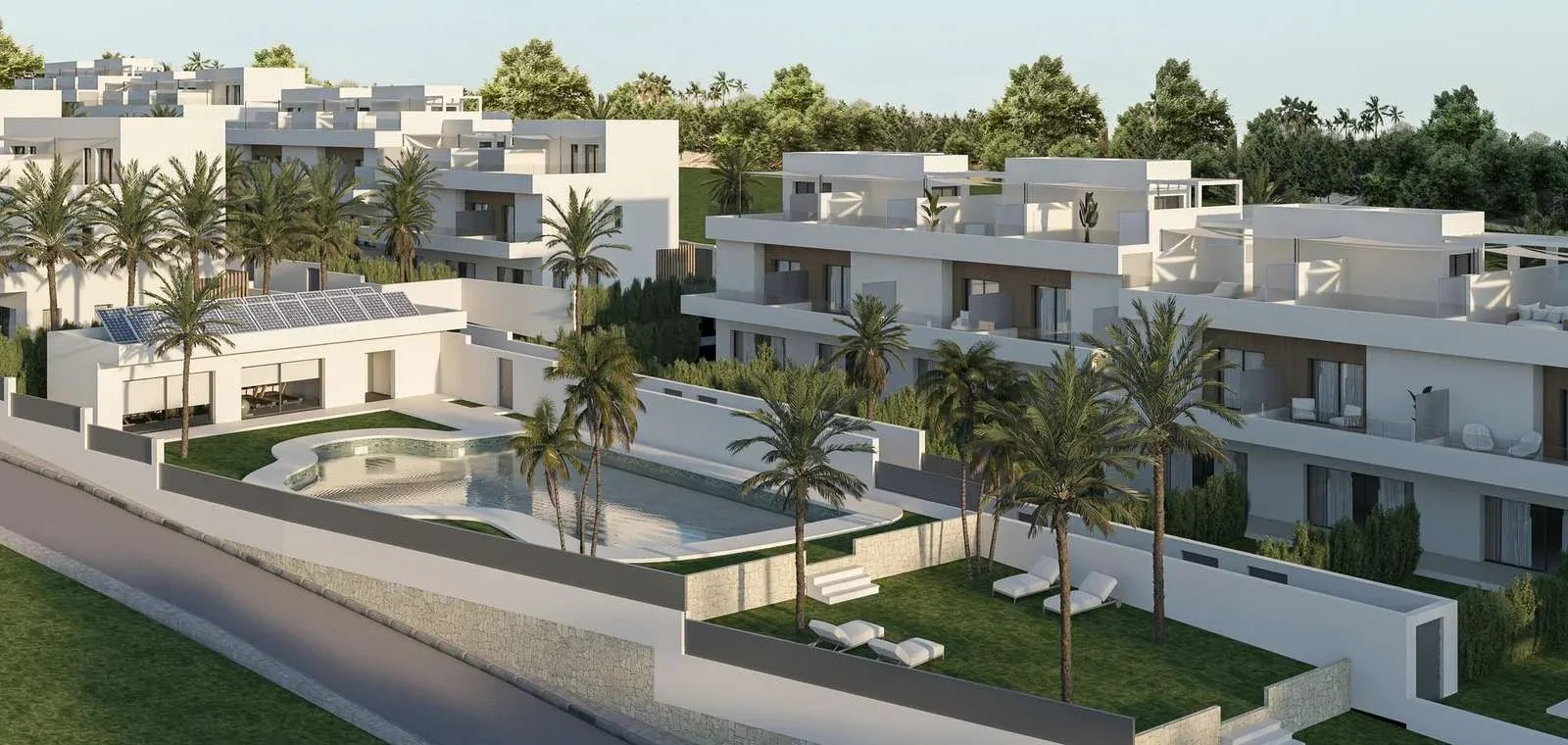
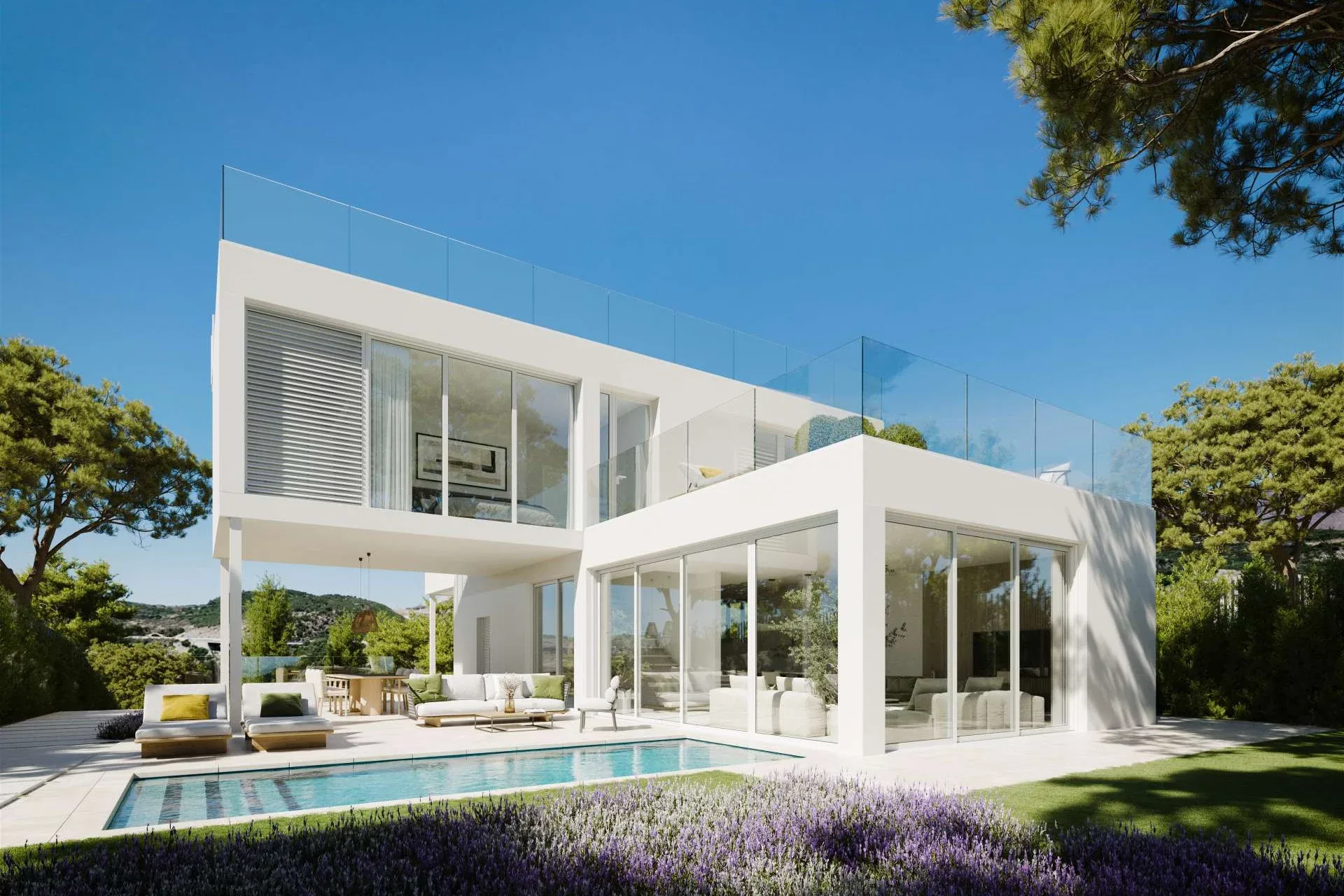
New developments in Estepona
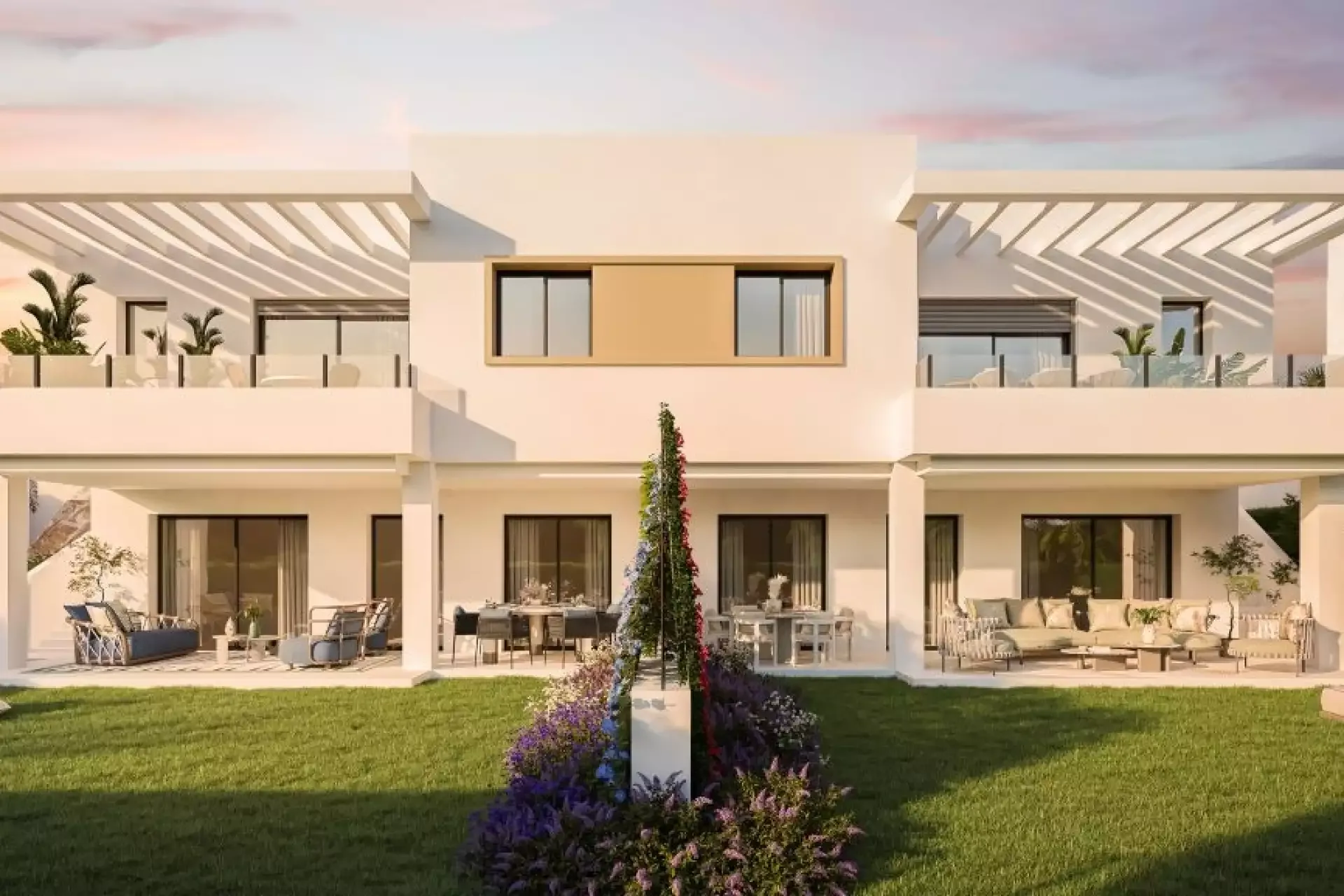
Your first year on the western Costa del Sol
The first year is when the coast turns from a holiday destination into home. This is how it can unfold:
- Month 1 Padrón, bank account, phone, and the first long walks along the promenade.
- Months 2–3 Residence document, healthcare, schools, and a favourite café.
- Months 3–6 A club, a sport, Spanish lessons and the first friends.
- Months 6–12 The festivals of the year, weekends in Andalusia, and perhaps your own new home.
By the end of the year, the drive between Estepona and Marbella has become a familiar route, you know which beach is quiet on a Sunday and which restaurant has the best view of the sunset, and friends from home are asking when they can come and visit. That is the moment the move is complete: not when the paperwork is finished, but when the coast feels like your own.
Dogs are welcome on the Costa del Sol too. They travel within the EU with a pet passport, a microchip and a rabies vaccination, and the coast has dog beaches, long promenades and the coastal path of Estepona for daily walks. A garden apartment or a townhouse with its own garden gives them a place in the sun as well.
Moving to the western Costa del Sol, step by step
A move to Marbella or Estepona follows a clear sequence, and most of it can be prepared from home.
- Visit both towns for a few days, ideally in winter as well as summer.
- Choose your residence route if you are not an EU citizen, and prepare the documents.
- Get your NIE and open a Spanish bank account.
- Decide rent or buy, and shortlist neighbourhoods and developments.
- Register on the padrón after arrival and apply for your residence document.
- Set up healthcare, schools and the practical side of the household.
- Settle in: clubs, Spanish lessons and the first friends.
Our guide to the NIE number in Spain explains the first practical step. From there, the paperwork is done in a few weeks, and the life you came for can begin.
Living in Marbella or Estepona: how to find your home
Start with the life you want, then compare the towns, then the homes. Picture an ordinary week: where you have your coffee, how you spend your afternoons, where the children go to school, where you eat on a Saturday night. Then spend a few days on the coast and try that week in both towns.
If living in Marbella is your dream, you will love it. If you want that same coast with more space, more choice and a real Spanish town around you, look half an hour west to Estepona. Either way, I would be delighted to show you both and help you find the home where your new life begins.
Frequently asked questions
What is living in Marbella like?
Living in Marbella means sunshine, beaches, golf, fine restaurants and a large international community, with the charm of an Andalusian old town at its heart. It is lively all year, with Puerto Banús, the Golden Mile and Nueva Andalucía among its best-known areas.
How much does it cost to rent in Marbella?
On our own analysis, long-term rents in Marbella averaged about €23.7 per square metre a month in August 2026. In Estepona, half an hour west, the average was about €21, around 13% lower.
What do New Builds cost in Marbella?
On our survey of 18 September 2026 the New Build median in our Marbella market area was €7,491 per square metre. In Estepona it was €5,145, around 31% lower, and for €500,000 you get around 97 square metres there instead of 67.
Is Estepona a good alternative to living in Marbella?
Yes. Estepona is half an hour west on the same coast, with a restored old town, a long promenade, its own hospital and the largest choice of New Builds between Sotogrande and Marbella, at clearly lower prices per square metre. Living in Marbella stays within easy reach for an evening out.
How have property values developed in Marbella and Estepona?
On our own analysis, the Resale index rose by 151.3% in ten years to August 2026 in Marbella and by 194.1% in Estepona. Over the last year the figures were 4.0% and 17.4%.
Are there international schools near Marbella?
Yes. The Costa del Sol has international schools teaching in English and other languages, including the German School in Ojén near Marbella, and Spanish state schools are free for residents.
Do I need a visa to live in Marbella?
EU citizens register as residents after three months. Non-EU citizens need a residence route, most often the non-lucrative visa for people living on their own means or the digital nomad visa for remote workers.
What is the rental yield in Marbella?
On our own analysis, the gross rental yield on Resales was 4.75% in Marbella and 5.05% in Estepona in August 2026.
Where is the best place to live in Marbella?
That depends on your life: the old town for Andalusian charm, the Golden Mile and Puerto Banús for glamour, Nueva Andalucía for golf, and San Pedro de Alcántara for a relaxed, family-friendly town feel.
How far is Marbella from Estepona?
About half an hour by car along the coast. Málaga airport is 84 kilometres from Estepona, with Marbella on the way.
Sources & official links
- BOE – Royal Decree 1155/2024, Immigration Regulation (checked 21.09.2026)
- BOE – Royal Decree 240/2007, residence of EU citizens (checked 22.09.2026)
- GOV.UK – Healthcare for UK nationals living in Spain (checked 22.09.2026)
- Deutsche Schule Málaga (checked 20.09.2026)
- Ayuntamiento de Estepona – 2026 budget (checked 21.09.2026)
- AEMET – Climate values Málaga Airport 1981–2010 (checked 21.09.2026)